

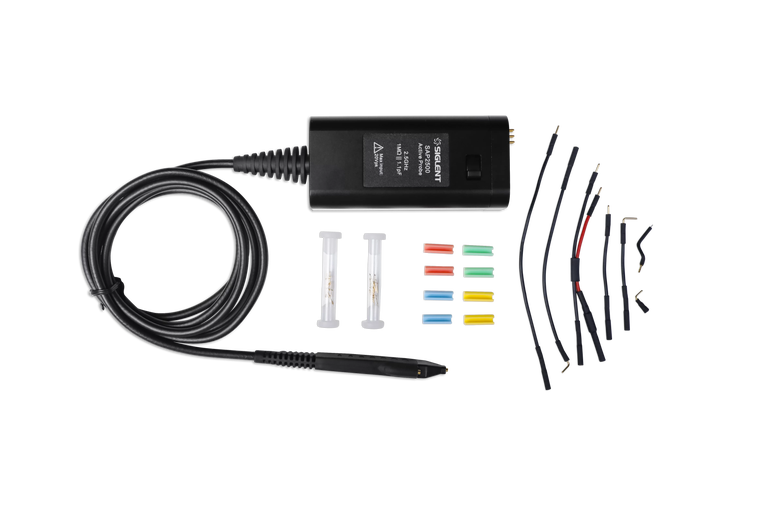
Siglent SAP2500D 2.5GHz Differential Active Probe, 2.5 GHz

Siglent SAP2500D differential active probe, over 2.5 GHz probe bandwidth, 1 pF and 200 kOhm differential input, SAPBus powered, divide-by-10.
Measuring across a node, not against earth
The SAP2500D is a differential active probe: more than 2.5 GHz of probe bandwidth, a differential input of 1 pF in parallel with 200 kΩ, ÷10 attenuation, powered and configured by the oscilloscope over SAPBus.
A single-ended probe measures everything against the oscilloscope's ground, which is bonded to mains earth. That is fine for a signal already referenced to the same ground and useless for anything that is not — the two ends of a sense resistor, a signal riding on a switching node, one leg of a differential pair. A differential probe has no earth reference at its tips: it reports the difference between them and rejects whatever the pair sits on top of. That is what lets you put it across a component rather than from a component to ground.
At a glance
- TypeDifferential active
- Bandwidth>2.5 GHz
- InterfaceSAPBus
- Cable length130 cm
- Max input20 V non-destructive
Order code SAP2500D · supplied by SIGLENT
What it is for
Across a current-sense resistor
Both ends float, so you read the voltage across the shunt itself rather than two large numbers against ground and the small difference between them.
One leg of a differential pair
Differential signalling is everywhere in high-speed design, and a probe that can only measure to ground cannot properly see it.
Gate drive on a switching node
The gate-source voltage of a high-side device is referenced to a node that is itself swinging. A differential probe measures it; a single-ended one cannot.
Probe bandwidth and system bandwidth are different numbers
Siglent publishes both figures for this probe, and the gap between them is the single most useful thing to understand before ordering:
A probe and an oscilloscope form one system, and the system is always slower than its fastest part. The datasheet quotes 2 GHz on an SDS6204A because that is what the combination delivers — so if you need a specific system bandwidth, tell us which oscilloscope you are using and we will give you the real figure for that pairing rather than the probe-only number.
Specifications
| Parameter | Value |
|---|---|
| Bandwidth (probe only) | > 2.5 GHz |
| Bandwidth (with oscilloscope) | 2 GHz (SDS6204A) |
| Differential input capacitance | 1 pF |
| Differential input resistance | 200 kΩ |
| Single-ended input resistance | 100 kΩ |
| Input dynamic range | ±4 V |
| Offset range | ±8 V |
| Attenuation ratio (DC) | ÷10 |
| Offset accuracy | < 3 % |
| DC gain accuracy | < 3 % |
| Maximum input voltage (non-destructive) | 20 V |
| Interface | SAPBus |
| Cable length | 130 cm |
From the SIGLENT Probe Data Sheet, revision EN01D.
Before you order
- ±4 V differential, ±8 V offset. The signal window is ±4 V differential — narrower than the single-ended probes, which is the usual trade for differential inputs at this bandwidth. Offset moves the window; it does not enlarge it.
- 20 V non-destructive, and it is not a HV probe. This is a high-speed probe, not a high-voltage one. For mains-referenced or high-voltage differential work use the DPB / SDP high-voltage differential range instead, which is built for it.
Differential voltage and common-mode voltage are separate limits
The ±4 V figure is the differential range — the difference between the two tips. How far the pair as a whole may sit above ground is a different question, and the 20 V non-destructive figure is what bounds it. Both apply at the same time, and confusing them is the most common way an active probe gets damaged.
SAPBus — the oscilloscope does the setup
This probe connects through SAPBus, which carries power, identity and control down the same connector as the signal. The oscilloscope recognises the probe by name, applies its attenuation automatically and puts its offset control on screen. There is no external power supply to find and nothing to set by hand.
SAPBus inputs are found on the SDS7000A, SDS6000A, SDS6000L, SDS5000X and SDS3000X HD families. It will not work on an oscilloscope with plain BNC inputs.
Not sure whether your oscilloscope has SAPBus? Ask us with the model number and we will confirm before you order.
Tips and accessories
Tips are consumables on an active probe — they are the part that wears, bends and eventually breaks.
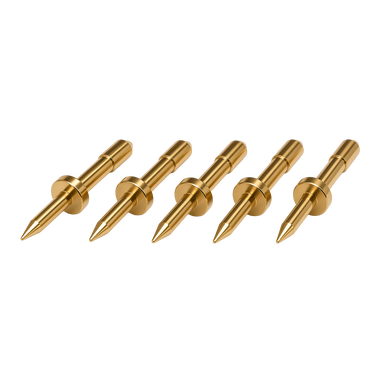
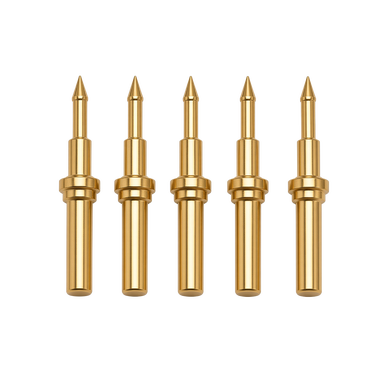
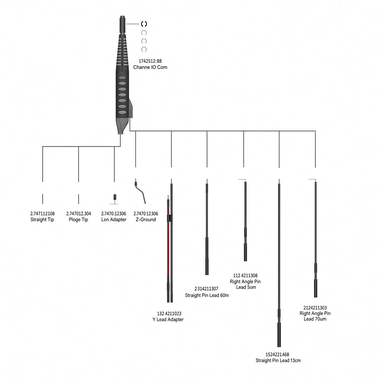
The SAP2-kit (€298) is the accessory kit specified for the SAP2500D and is available to order — ask us for it.
Other active probes
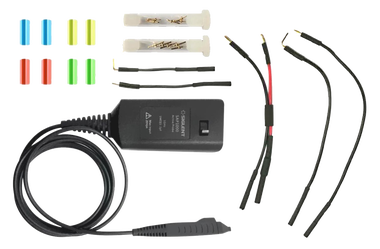
The full range, with the system-bandwidth figures and every accessory, is on the active probes page.
Tell us your oscilloscope and we will give you the real bandwidth
Probe bandwidth and the bandwidth you actually get are different numbers, and the difference depends on the oscilloscope. Send us the model and the signal you are chasing and we will tell you what this probe will genuinely deliver — before you buy it.
More information
Specifications are taken from the manufacturer’s official datasheet (SIGLENT Probe Data Sheet EN01D) and are provided for guidance only. They are subject to change without notice, and errors and omissions may occur. The manufacturer’s current datasheet is the definitive reference. Prices exclude VAT.