

Probes
The probe decides what your oscilloscope can actually see. 51 probes in ten families — from a €16 passive probe to an 8 GHz differential active probe, and the current, high-voltage and optically isolated probes a plain 10X probe cannot replace.
Browse by family
Ten families, 51 probes. Every family has its own page with full specifications and a comparison table — or read the complete list further down this page.
The probe is part of the measurement
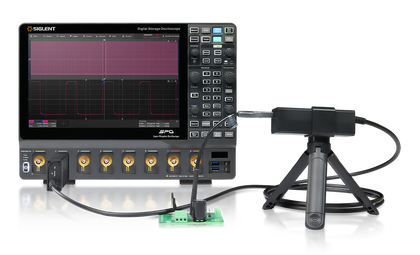
An oscilloscope is only as good as what is connected to its input. A 10X passive probe presents roughly 10–15 pF at the tip; on a fast edge that capacitance loads the circuit and rounds off the very transition you are trying to look at. Its ground clip is wired to the instrument chassis and therefore to mains earth, so it cannot go anywhere that is not already at earth potential. And it reads volts only — current is invisible to it.
Each family below removes one of those limits: active probes cut the tip capacitance to about 1 pF, differential probes remove the earth reference, current probes clamp round a conductor without breaking it, optically isolated probes do both at once with thousands of volts of isolation, and a power rail probe subtracts the DC level so the millivolts riding on it become visible. Pick the limit that is in your way.
Which probe do you need?
One question usually settles it: what is stopping an ordinary probe from doing the job?
Passive probes
General bench work to 1.5 GHz. Cheap, rugged, and enough for most of what an oscilloscope is used for.
Active probes
Above ~500 MHz or on a high-impedance node, tip capacitance changes the answer. 1 GHz to 8 GHz.
Current probes
Clamp round the conductor and read amps, AC and DC, without inserting a shunt.
Differential & isolated
Floating rails, half-bridges, mains. To ±7,000 V differential, or full optical isolation.
Passive probes
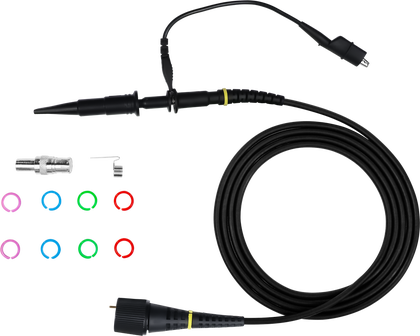
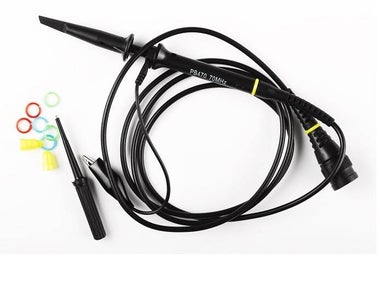
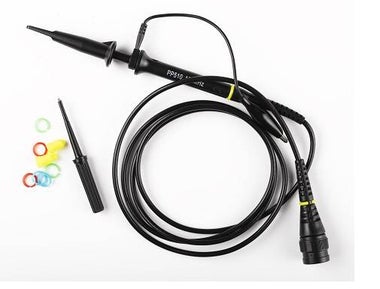
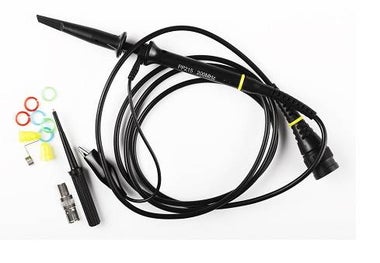
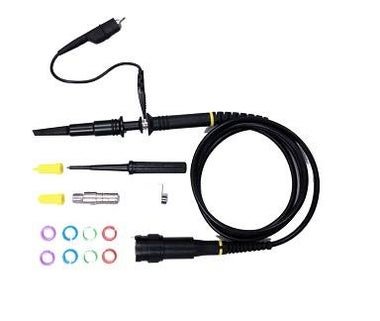
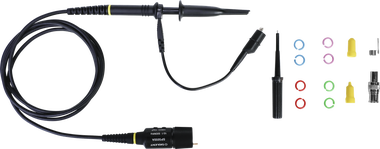
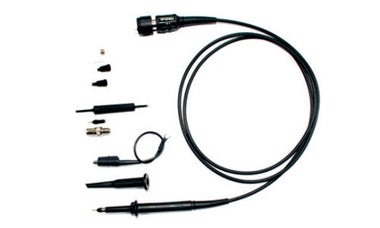
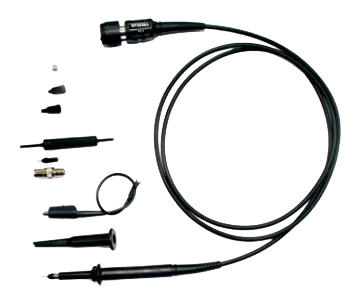
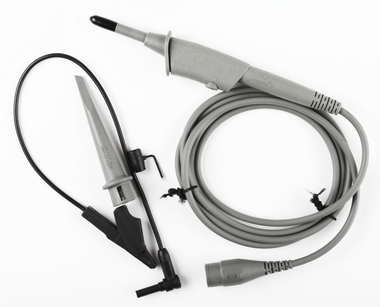
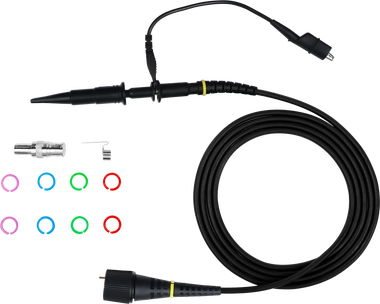
The probe that comes with the oscilloscope, and the ones worth upgrading to. A 10X passive probe presents 10–15 pF at the tip and reads volts against earth — ideal for most bench work, and the cheapest way to add a spare or replace a damaged one. The SP6150A is the exception: it reaches 1.5 GHz at 1.8 pF by using a 500 Ω transmission-line design, so it belongs on driven, low-impedance lines rather than a high-impedance node.
Active probes
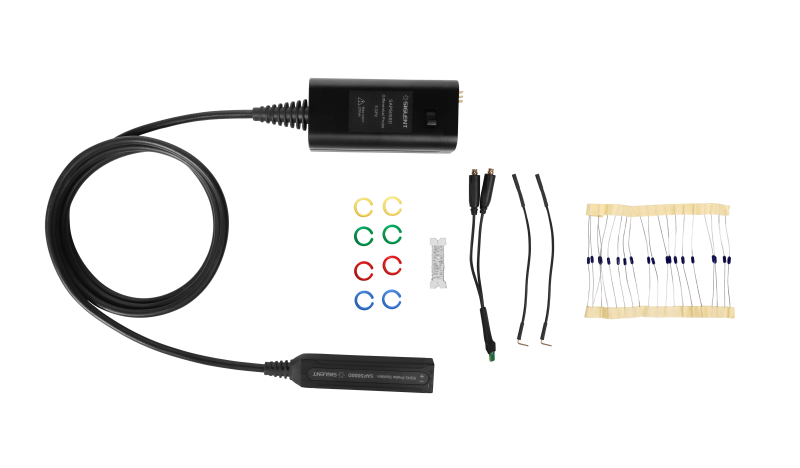
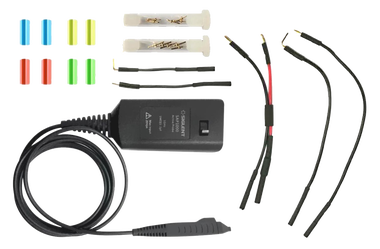
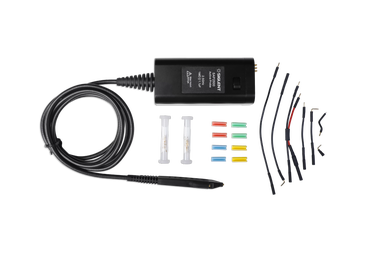
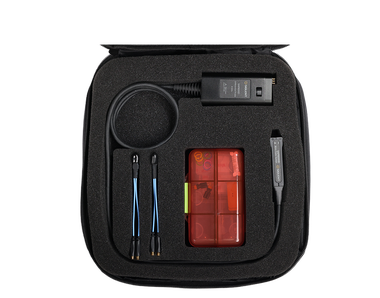
About 1 pF at the tip instead of 10–15 pF, so the circuit barely notices the probe is there. This is what you reach for above roughly 500 MHz, or on any high-impedance node where a passive probe would load the signal and round off the edge you are trying to measure. Single-ended to 2.5 GHz, differential to 8 GHz, all over the SAPBus interface.
Probe adapters
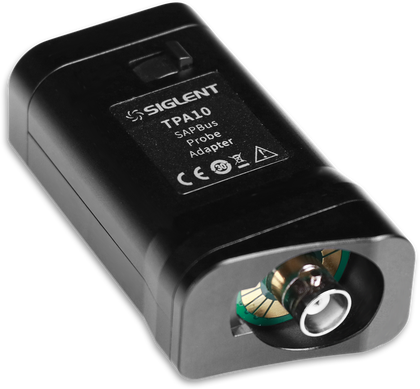
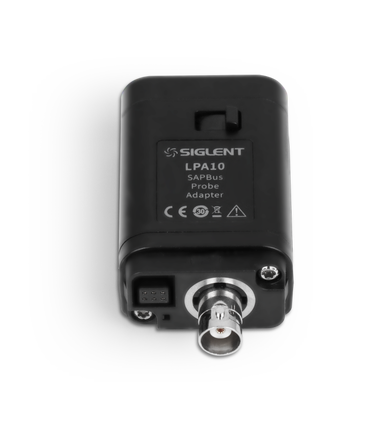
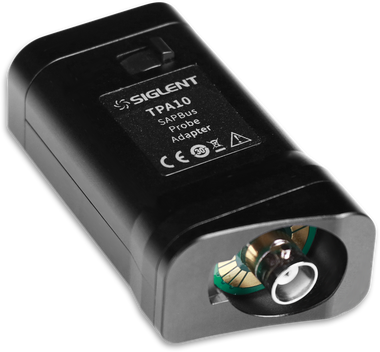
Keep the active probes you already own when the oscilloscope changes. The TPA10 runs Tektronix TekProbe Level II probes on an SDS5000X, SDS5000X HD or SDS6000A — Level I and TekVPI use different interfaces and will not fit.
Current probes
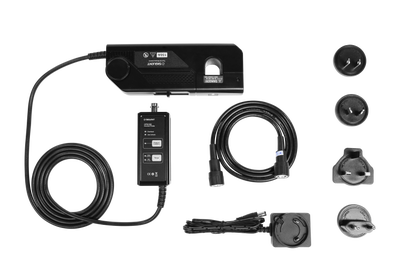
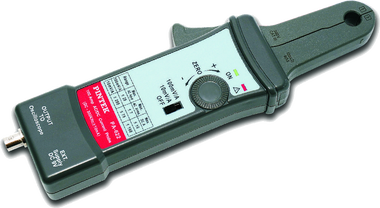
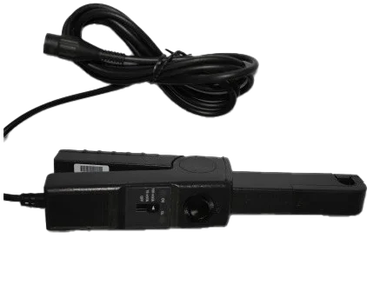
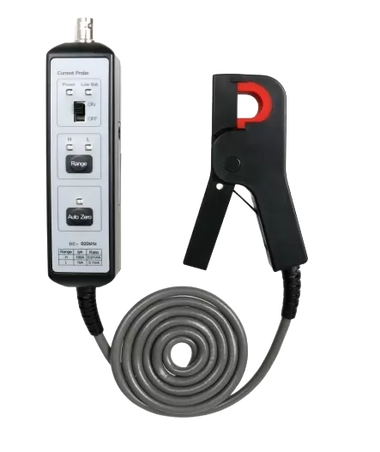
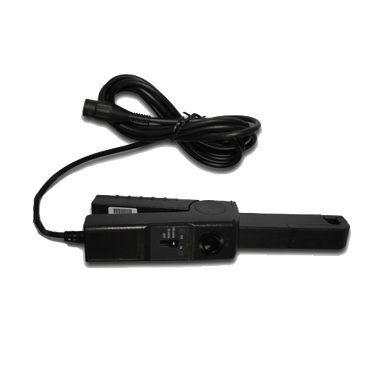
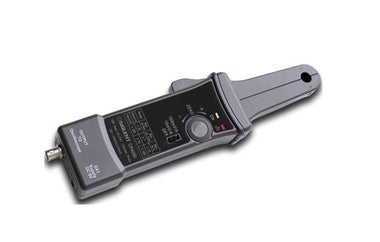
Clamp around a conductor and read amps on the screen, AC and DC, without breaking the circuit or adding burden resistance. A clamp meter gives you one averaged number; a current probe gives you the waveform, and it is the peaks that decide fuse ratings, capacitor lifetime and EMC behaviour. Fourteen models from 200 kHz to 100 MHz and 60 A to 750 A peak.
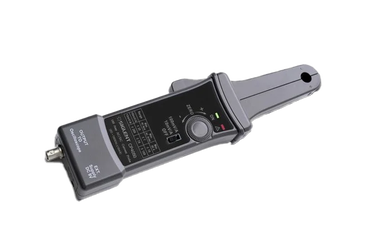
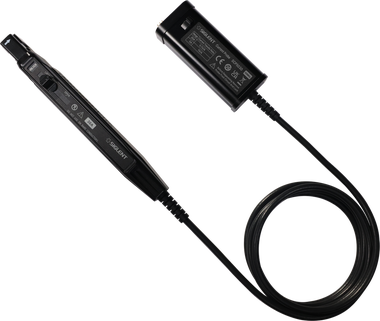
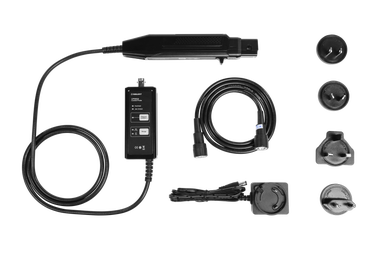
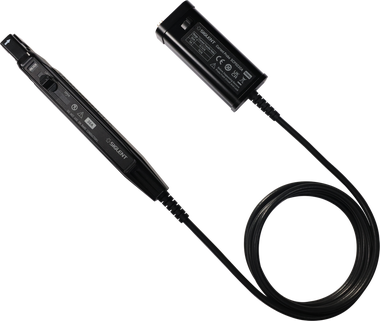
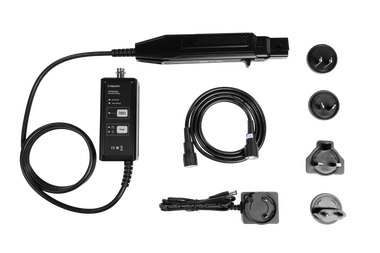
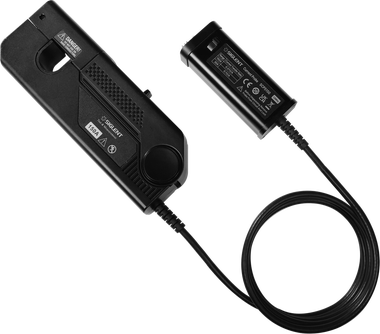
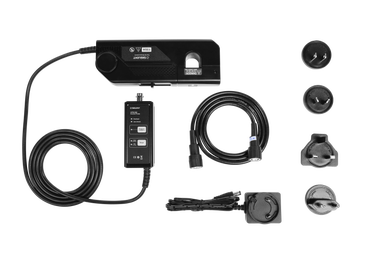
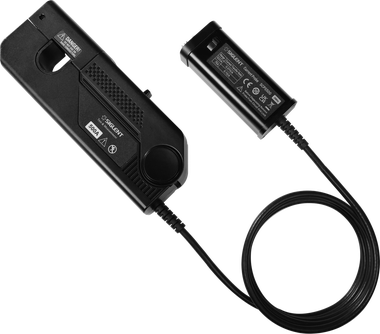
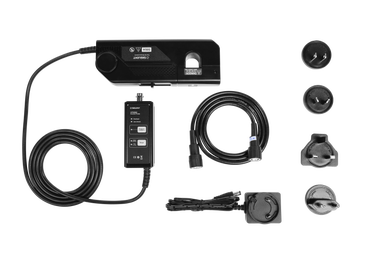
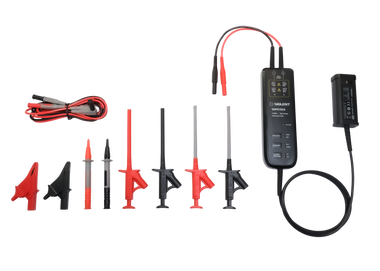
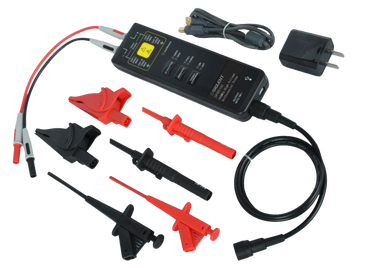
Differential high-voltage probes
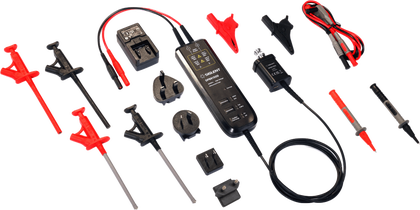
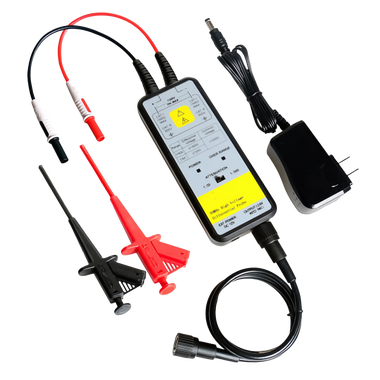
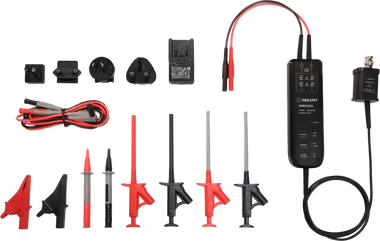
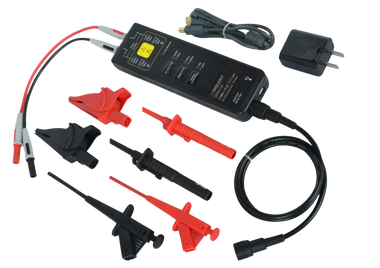
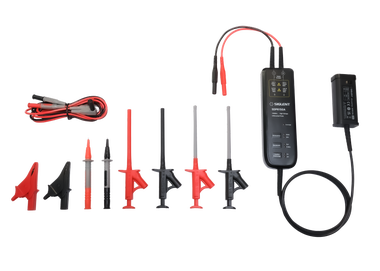
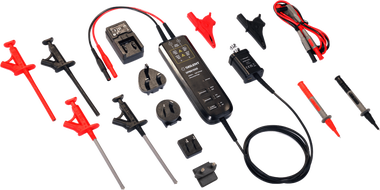
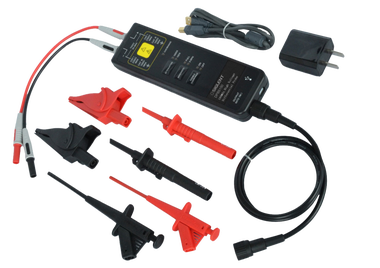
A passive probe’s ground clip is wired to the oscilloscope chassis and therefore to mains earth — clip it to a floating node and you short that node to earth through the instrument. A differential probe has no earth reference at its tips at all. Up to ±7,000 V between the tips, 50 MHz to 400 MHz.
Extreme voltage & optical isolation
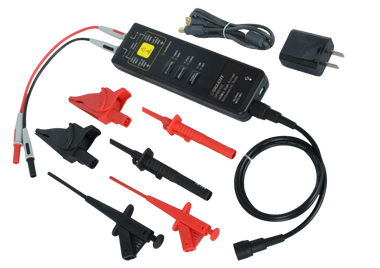
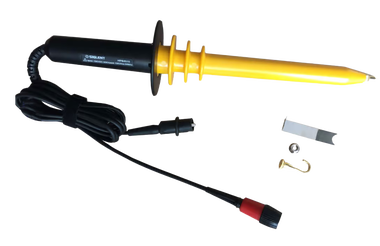
Where even a differential probe runs out. The HPB4010 reaches 10 kV, though it is single-ended so its ground must be at earth potential. The ODP6000B probes send the signal across on light, so the measurement and the oscilloscope share no electrical connection at all — no ground loop and no common-mode limit, at 500 MHz or 1 GHz.
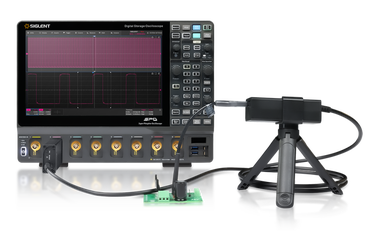
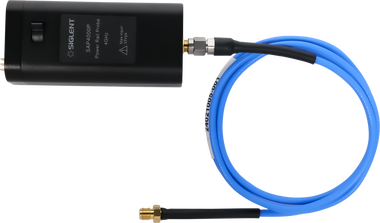
Power rail probe
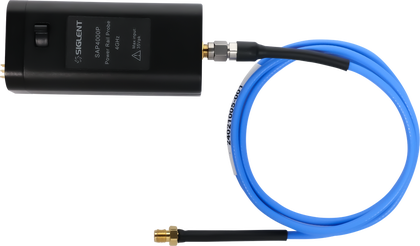
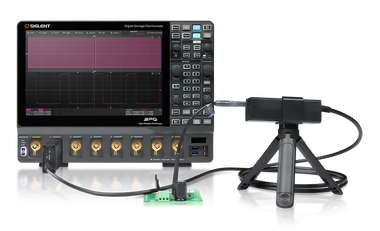
Measuring millivolts of ripple on a DC rail is the one job an ordinary probe simply cannot do: a 10X probe divides a 20 mV ripple down to 2 mV before the scope quantises it, and has no way to offset the rail away. The SAP4000P offers ±24 V of offset at 1.1:1, putting the ripple across a ±600 mV window at 4 GHz.
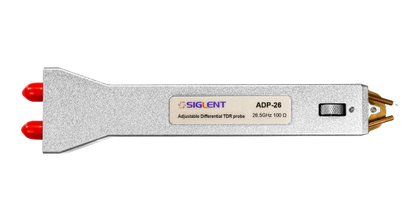
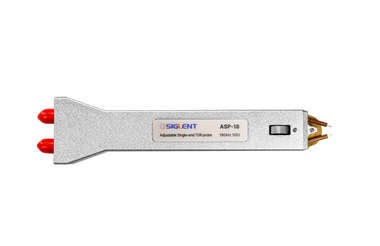
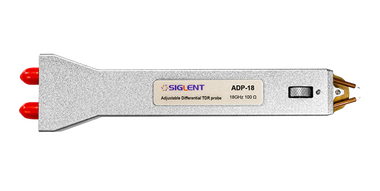
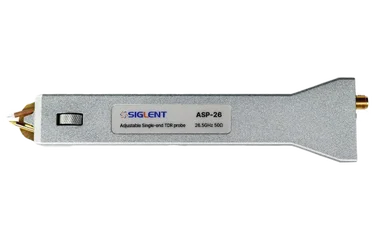
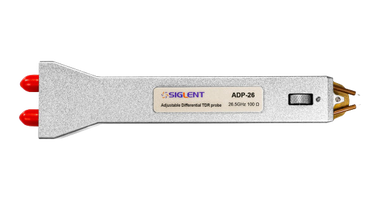
Adjustable TDR probes
Time-domain reflectometry and impedance work on a VNA or TDR-equipped oscilloscope. Adjustable pitch so the tips land on the pads you actually have, single-ended or differential, to 26.5 GHz.
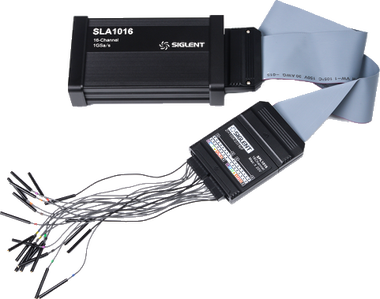
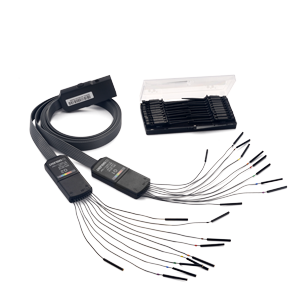
Logic probes
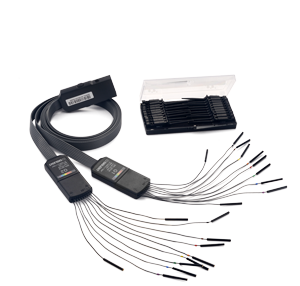
Turn a four-channel oscilloscope into a 4+16-channel mixed-signal instrument. The SPL2016 is the faster of the two at 1.25 GSa/s and 62.5 Mpts per channel; the SLA1016 suits the SDS1000X-E generation. Some scopes need a licence as well as the hardware — ask us and we will confirm which applies to yours.
Probe tools & accessories
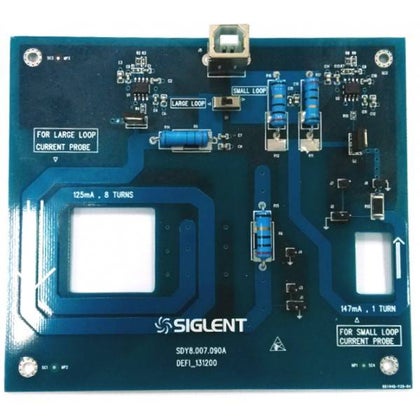
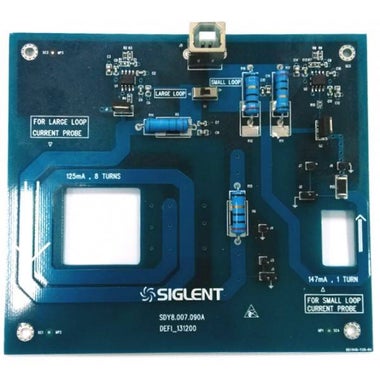
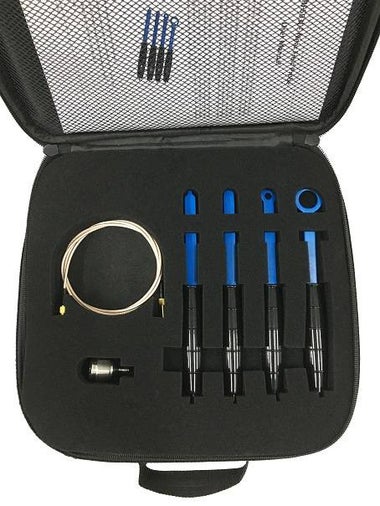
The deskew fixture matters the moment you multiply volts by amps: a current probe delays its signal slightly more than a voltage probe, and a few nanoseconds of skew makes a switching-loss figure meaningless. Near-field probes are for finding where emissions come from rather than measuring a node.
Application examples
Six measurements that come up constantly, and the probe each one actually needs.
Half-bridge and gate drive
High-side gate-source voltage floats by definition. This is the measurement that destroys probes and oscilloscope front ends when it is attempted with a ground clip.
Use a differential probe — DPB6150A upward.
Switch-mode supply development
Switch-node voltage and inductor current together, with enough bandwidth to see the transition where all the loss actually happens.
CP4050 or CP6030A for current, plus the DF2001A to deskew.
EV powertrain and traction inverters
Phase currents in the hundreds of amps sitting on a DC link of several hundred volts, none of it at earth potential.
CP6150 or SCP5150 with a DPB5700.
Power integrity on DC rails
Tens of millivolts of noise on a 1.0 V rail, with content running to gigahertz. The DC level has to be subtracted in hardware before the oscilloscope ever sees it.
SAP4000P power rail probe.
High-speed digital and signal integrity
Picosecond edges on a terminated line, where 10 pF of probe capacitance is enough to change the answer you get.
SP6150A for a low-cost start, SAP2500 or SAP5000D above that.
Mains and three-phase equipment
Directly across a live conductor, safely, with the measurement category matched to where you are probing rather than just the voltage.
DPB1300 or DPB6150A, with a CP4070 for the current.
Frequently asked
Which probe comes with my oscilloscope?
Every Siglent scope ships with one passive probe per channel, matched to its bandwidth. Those are fine for general work. You need something else when the measurement is beyond what a ground-referenced 10X probe can do: current, a floating or high-voltage node, or a signal fast enough that the probe’s own capacitance starts to load the circuit.
When do I need an active probe rather than a passive one?
Above roughly 500 MHz. A 10X passive probe presents around 10–15 pF at the tip, which loads a fast circuit and rounds the very edges you are trying to see. An active probe drops that to about 1 pF. The SP6150A is a middle path — 1.5 GHz and 1.8 pF for €230 — but only on low-impedance, driven lines.
What is SAPBus and does my oscilloscope have it?
SAPBus is Siglent’s active-probe interface: it carries power, identification and control down one connector, so the scope names the probe, sets its attenuation and reads the channel in the right units. It is on the SDS7000A, SDS6000A, SDS6000L, SDS5000X and SDS3000X HD. Probes marked SAPBUS above need it; those marked ANY SCOPE bring their own supply and connect over plain BNC.
Can I use a passive probe on a mains circuit?
Not across a floating or mains-referenced node. The ground clip is wired to the oscilloscope’s chassis and therefore to earth, so clipping it to a live point shorts that point to earth through the instrument — a destroyed front end at best, a hazard at worst. Use a differential high-voltage probe.
What is the difference between differential and common-mode voltage?
Differential voltage is what you measure between the two tips; common-mode is how far both tips sit above earth. They are different limits and both apply at once. A DPB5700 measures ±7,000 V between its tips, but the pair must stay within 1000 V CAT III of earth.
Do I need the DF2001A deskew fixture?
Only if you multiply voltage by current — switching losses, efficiency, safe operating area. A current probe delays its signal slightly more than a voltage probe, and a few nanoseconds of skew is enough to make a power figure wrong. The DF2001A gives both probes a known edge so you can null the offset first.
Do you stock probe tips and accessory kits?
Yes — replacement tips, ground leads, browsers, positioners and solder-in heads for the active and power rail probes. Not all are listed individually; tell us the probe model and we will quote the kit from the current price list.
Can I still buy a probe for an older oscilloscope?
Usually. The passive probes here fit any oscilloscope with a standard BNC input, whatever the make or age, and the CP4000, CP6000 and DPB series do too. Only the SAPBus probes are tied to recent Siglent models.
Not sure which probe fits?
Tell us what you are measuring, how fast it moves, how far it floats above earth and which oscilloscope you own. That is enough for us to name the right probe — and to say plainly when the cheaper one covers it.