

Cables, adaptors & connectors
Everything between the instrument and the thing you are measuring. Adaptors, terminations, attenuators and test leads in N, BNC, SMA and banana — all 50 Ω, and all chosen so they do not become part of the result.
The bits between are part of the measurement
Instruments get specified carefully and connected carelessly. The analyser is calibrated, the cable is a good one — and then the signal passes through whichever adaptor happened to be in the drawer. At DC that is harmless. As soon as the wavelength gets close to the size of the hardware, every junction where the impedance changes reflects a little of the signal back, and what returns adds to and subtracts from what is still arriving.
On a spectrum analyser that shows up as ripple across the trace; on a time-domain measurement it shows up as an edge that rings. In both cases it looks like the device under test is misbehaving, and the temptation is to go and redesign something that was fine. The parts on this page are the ones that keep that from happening: adaptors and terminations that are specified rather than assorted, all 50 Ω, matched to what our instruments actually present.
Below: a short guide to the connector families and where each one belongs, then the adaptors and terminations, general test leads, return-loss measurement, and cased accessory sets. Precision RF test cables have their own page, and so do the VNA calibration kits.
Looking for something more specific?
Two families are big enough to have pages of their own.
RF test cables
Precision 50 Ω assemblies from DC–2 GHz to 26.5 GHz, each with its published VSWR and insertion loss — plus a finder covering more than a hundred further cables that can be built to order in the length and connectors you need.
Browse RF cablesVNA calibration kits
Mechanical OSLT kits and electronic calibration modules in N, SMA, 3.5 mm and 2.92 mm, for every Siglent vector network analyser and for the SVA1000X and SSA3000X-R when they are used for reflection measurement.
Browse calibration kitsKnow your connector
Six families cover almost everything on a test bench. The frequency figures below are the practical everyday limits — precision versions of the same connector go higher, and the number that matters is always the lowest one in your particular chain.
| Connector | Coupling | Typical limit | Where you meet it |
|---|---|---|---|
| BNC | Bayonet, quarter-turn | DC–4 GHz | Oscilloscopes and their probes, function-generator outputs, counters, trigger lines — the default connector of the general electronics bench. |
| N | Threaded | DC–11 GHz | The RF port on Siglent bench spectrum analysers, signal generators and vector network analysers. Rugged, repeatable, and the one you will meet most on an RF bench. |
| SMA | Threaded, 1/4-36 | DC–18 GHz | Filters, amplifiers, antennas, evaluation boards and modules. Small, common, and easy to damage by over-tightening. |
| 3.5 mm | Threaded, air dielectric | DC–26.5 GHz | Precision and metrology work. Mates with SMA, and is what Siglent's calibration kits use even where a title says “SMA”. |
| 2.92 mm (K) | Threaded, air dielectric | DC–40 GHz | Millimetre-wave work. Mates mechanically with SMA and 3.5 mm, so a 40 GHz part can be used in a slower system — but not the other way round. |
| 4 mm banana | Push fit | DC and low frequency | Multimeters, power supplies and electronic loads. Not a controlled-impedance connector and not for RF. |
Adaptors & terminations
Prices exclude VAT.
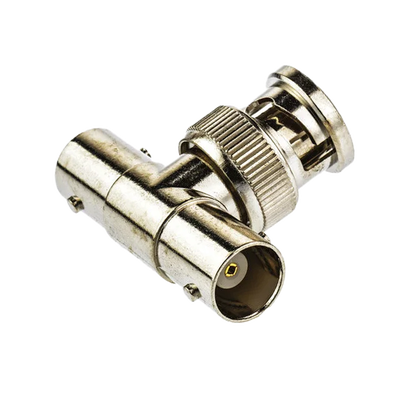
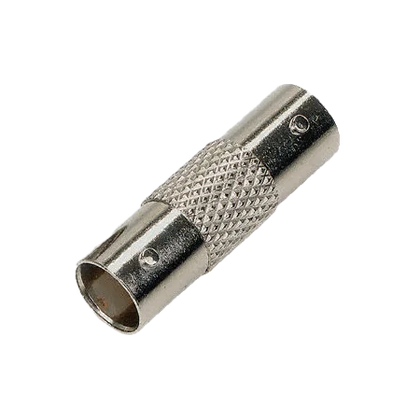
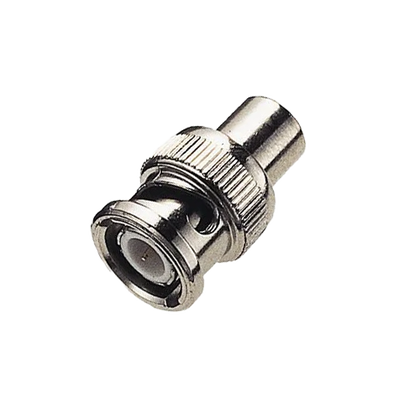
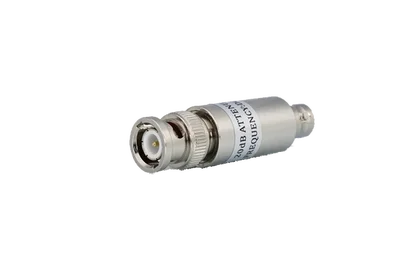
Test leads & general cables
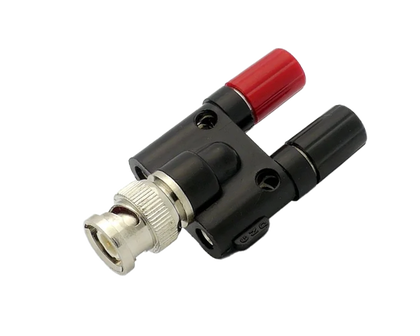
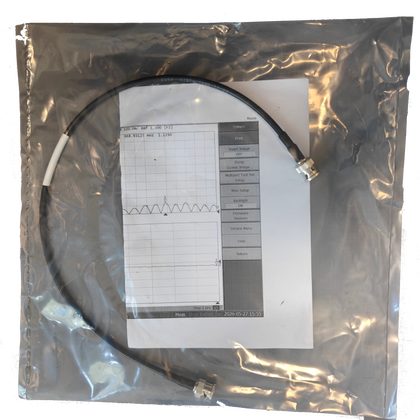
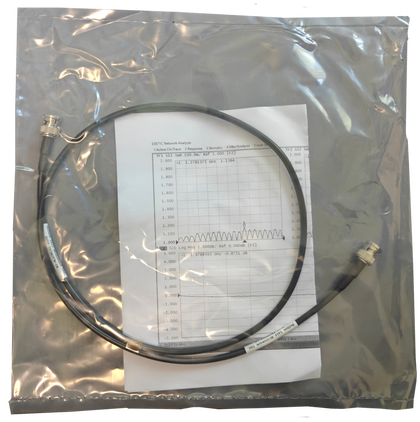
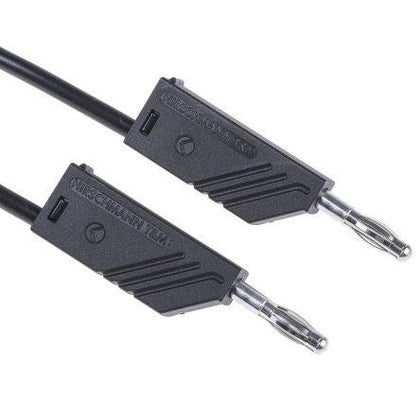
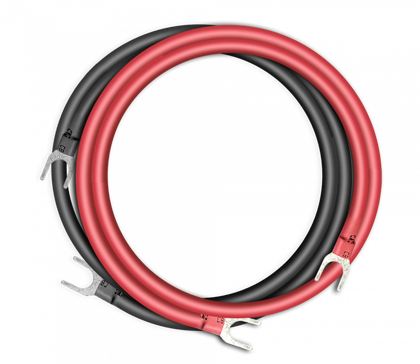
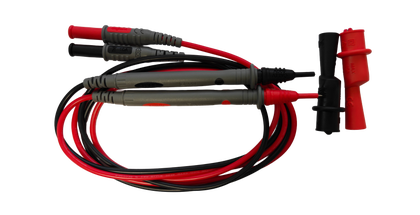
Coaxial leads for signal work, and the 4 mm and high-current leads that go with multimeters, power supplies and electronic loads.
Six things that quietly ruin a measurement
None of these will throw an error. They just make the number wrong, in ways that are easy to blame on the circuit.
50 Ω and 75 Ω BNC look identical
They are physically interchangeable and electrically not. A 75 Ω BNC dropped into a 50 Ω path reflects part of your signal, and the ripple it puts on your trace looks exactly like something the device under test did. Every BNC part on this page is 50 Ω.
The chain is only as fast as its slowest part
A 6 GHz cable behind a DC–2 GHz adaptor is a 2 GHz path. Bandwidth is set by the lowest-rated element, not by the most expensive one — so check the adaptor, not just the cable.
An adaptor is a component, not a joint
Every one adds insertion loss and a small mismatch. One is usually negligible; three stacked to reach an awkward port can dominate the uncertainty of the whole measurement. Prefer the right cable over a tower of adaptors.
An unterminated line reflects everything
Coax that ends in nothing sends the signal straight back. That is what the 50 Ω terminator is for — on the far leg of a T, or on any input you are not currently using.
A T-connector makes a stub
Splitting a signal with a T is fine for a trigger line or anything low-frequency. At RF the unused leg behaves as a stub and disturbs the match, so use a proper splitter or a power divider instead.
SMA is easy to destroy by hand
Over-tightening deforms the dielectric and the result is a connector that quietly measures wrong from then on. Finger-tight plus a small nudge with a spanner; for precision work, a torque wrench.
Measuring what comes back
A spectrum analyser with a tracking generator tells you what passes through a device. Very often the question is the opposite one: how much is being reflected? That is what tells you whether an antenna is tuned, a filter is matched, or a cable assembly is any good.
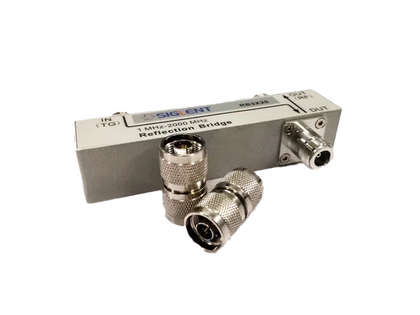
A return-loss bridge answers it without a vector network analyser. It separates the reflected wave from the incident one so the analyser you already own can display it — the same measurement a VNA makes in magnitude, for a fraction of the outlay.
Bridge alone, or bridge plus licence?
Reflection measurement on an SSA3000X needs the hardware and the SSA3000-Refl software option. Bought separately that is €419 for the bridge plus €369 for the licence — €788. The kit below contains both.
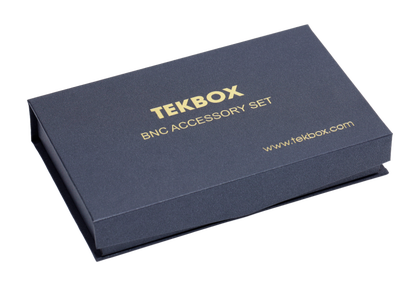
Cased accessory sets — TekBox
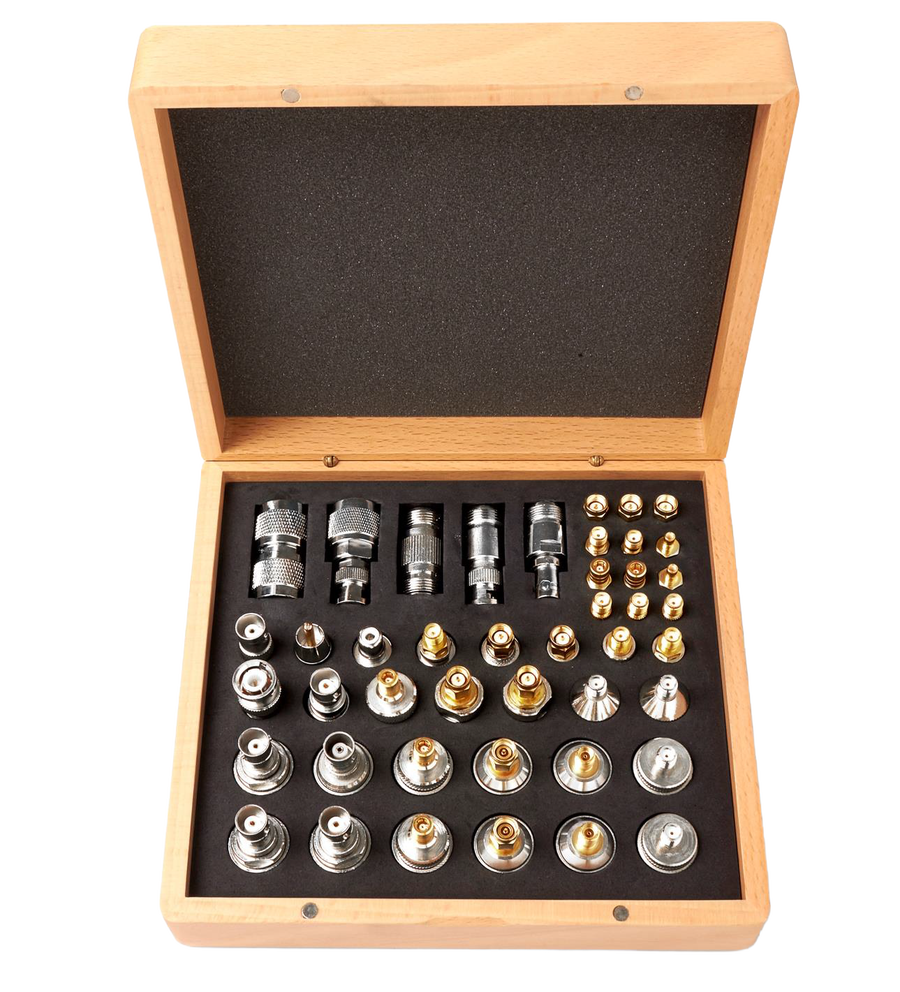
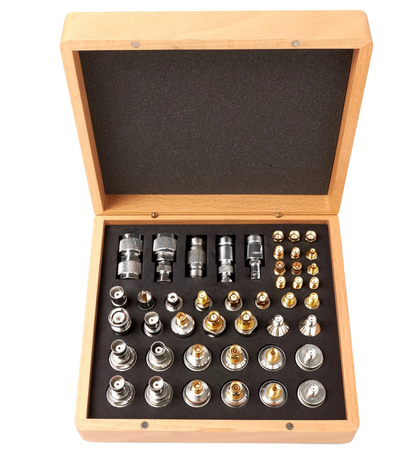
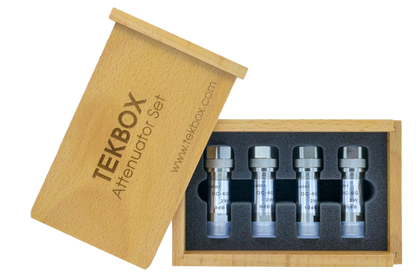
Three sets from TekBox, an Austrian test accessory maker whose EMC products we also stock. Buying an assortment in a case costs less than the same parts individually and, more usefully, means the adaptor you need at eleven at night is in the box rather than in somebody else’s drawer.
Questions we are asked
Where are the RF test cables?
They have their own page. RF cables & adaptors lists the stocked precision cables with VSWR and insertion-loss figures for each, plus a finder covering more than a hundred further assemblies that can be built to order. This page covers the adaptors, terminations and general leads that go around them.
Which adaptor do I need for a Siglent spectrum analyser?
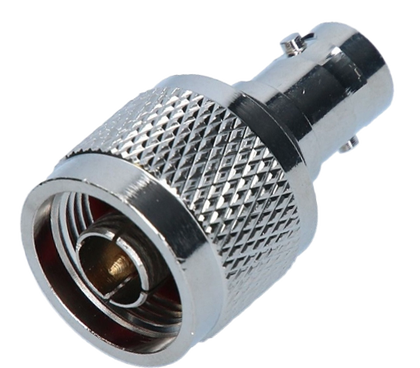
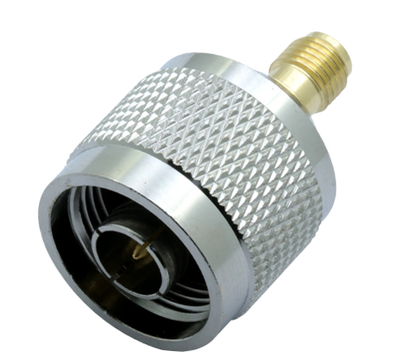
The bench analysers, signal generators and VNAs present an N female port. To reach an SMA device you need N (M) → SMA (F); to reach BNC equipment, N (M) → BNC (F). Both are on this page at €3. If you need several at once, the UKitSSA3X utility kit bundles four adaptors, two cables and a 10 dB pad.
Are these adaptors specified for RF use?
The N and BNC adaptors here are general-purpose parts for bench work and are best treated as DC–2 GHz. For measurements where the adaptor must not contribute to the result — calibrated VNA work, or anything above a couple of gigahertz — use a precision adaptor or, better, a cable that already ends in the connector you need.
What does a return-loss bridge do that my analyser cannot?
A spectrum analyser with a tracking generator measures what passes through a device. A return-loss bridge lets the same instrument measure what comes back — so you can check the match of an antenna, filter or cable without buying a vector network analyser. The RB3x25 covers 1 MHz to 2.5 GHz.
Should I buy the bridge or the kit?
Measuring reflection on an SSA3000X needs both the bridge and the reflection-measurement software. Bought separately that is €419 for the RB3x25 plus €369 for the SSA3000-Refl licence — €788. The RBSSA3X25 kit contains both for €559. If you already own the licence, buy the bridge alone.
Do you sell connectors for building my own cables?
Not as loose parts. We stock finished assemblies and adaptors, and Siglent will build cable assemblies to a specification — length, connectors and frequency range — through the configure-and-quote form on the RF cables page.
Tell us what you need to connect
Give us the two ports and the highest frequency that matters, and we will tell you what goes between them — including when the honest answer is one cable rather than three adaptors. We are the official Siglent distributor for the European Union.