

Calibration kits & ECal modules
Twenty-one mechanical OSLT kits in Type-N and 3.5 mm to 26.5 GHz, a WR-42 waveguide kit, and eight SEM5000A electronic calibrators. A vector network analyser is only as accurate as its calibration, and the kit is what defines it.
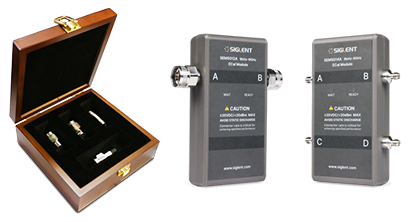
Calibration is where the accuracy comes from
A vector network analyser does not measure your device. It measures everything between its own receivers and your device — the internal signal path, the connectors, the cables you fitted, the adaptor you added because the genders did not match. All of it is in the result.
Calibration is how that gets removed. You present standards whose behaviour is known precisely — an open, a short, a matched load and a through — the analyser measures them, and it then solves for the error terms of everything in the path. The reference plane moves from inside the instrument to the end of your cable, which is where your device actually starts.
Which means the calibration kit is not an accessory in the ordinary sense. It is the reference your measurements are built on, and its quality sets the ceiling on what the analyser can tell you — however good the analyser is.
Mechanical kits
Precision standards you connect one at a time. Lower cost, no power or USB needed, and the traceable reference many quality systems expect.
Compare the twoElectronic (ECal)
One module, one connection, calibration in seconds. Far less scope for error, and far fewer wear cycles on the test port — which is the expensive part.
Compare the twoWhich connector?
Decided by your analyser’s test ports, not by preference — the table below maps every Siglent VNA to the kit family it needs.
Which kit does my analyser need?
Every port below is taken from that instrument’s own datasheet.
| Analyser | Frequency | Test port | Kit family |
|---|---|---|---|
| SNA5002A · SNA5012A · SNA5004A · SNA5014A | 4.5 / 9 GHz | Type-N female | Any N-type kit |
| SNA5000X-E series | up to 8.5 GHz | Type-N female | Any N-type kit |
| SNA5022A · SNA5032A | 13.5 / 26.5 GHz | 3.5 mm NMD male | Any 3.5 mm kit |
| SNA6000A (3.5 mm models) | up to 26.5 GHz | 3.5 mm NMD male | Any 3.5 mm kit |
| SVA1000X series VNA | 1.5 / 3.2 / 7.5 GHz | Type-N female | F503/F603 or F504/F604 only |
| SSA3000X-R series VNA + DTF | up to 7.5 GHz | Type-N female | F503/F603 or F504/F604 only |
The kit’s gender is the opposite of your cable’s. A standard has to mate with the interface you are calibrating to. The TS kits carry both genders and cover a two-port measurement where the two ends differ.
It is not only the VNAs — the SVA1000X and SSA3000X-R need a kit too
Both are spectrum analysers that also do vector network measurement. The SVA1000X measures S11 and S21 with amplitude and phase; the SSA3000X-R adds vector network analysis and distance-to-fault, included rather than optional. A reflection measurement is only as good as its calibration on either of them, so both need a mechanical kit — and this is the part people miss when they buy the analyser.
Their supported list is shorter than the full range. Siglent specify eight kits for these two series — the 4.5 GHz and 9 GHz single-gender kits in both connector types:
Not the TS, Y-series, 18 GHz or 26.5 GHz kits, and not an ECal module — those are specified with the SNA vector network analysers. Keysight 85032F, 85032B/E and 85033D/E are also on Siglent’s supported list if you already own one. If in doubt, ask us before ordering.
Mechanical or electronic?
Your analyser’s connector is fixed — this is the part you actually choose. Both methods produce a valid calibration to the same standard; they differ in how you get there, what it costs, and what it does to your instrument over time.
A mechanical kit is a set of physical artefacts. You connect each one in turn while the analyser measures it. An ECal module holds the same standards inside a single box with electronic switches: you connect it once, and the analyser steps through every state itself.
Mechanical kits
Precision open, short, load and through standards, supplied loose or in an integrated body. The traditional reference, and still the one many quality systems are written around.
- Far cheaper to buy in. A 4.5 GHz N kit is €339 against €2,075 for the equivalent ECal module.
- Nothing to connect but the standard. No USB, no power, no driver, no dependency on the analyser’s firmware supporting a particular module.
- Physical artefacts. Where a quality system or an auditor expects traceable standards you can hold, this is what they mean.
- Every standard is a connection. A full two-port calibration needs open, short and load on each port plus a through — seven matings minimum, and a four-port calibration runs past a dozen.
- The sequence is yours to get right. Wrong standard, wrong port, or a connector nipped up instead of torqued, and the calibration is quietly wrong rather than obviously broken.
- Minutes, not seconds — every time, and more often than you would like.
ECal modules
One module containing every standard, switched electronically. Connect it once, press calibrate, and the analyser steps through all of them itself — in seconds, the same way every time, whoever is doing it.
- Seconds instead of minutes — and it compounds. Say a two-port mechanical calibration takes ten minutes once you have fetched the kit, worked through seven connections and torqued each one. Twice a day across a working year is over eighty hours. The module pays for itself in time long before it wears out.
- The errors simply cannot happen. No standard fitted in the wrong order, none skipped, none left finger-tight. A mechanical calibration has seven chances to go quietly wrong every time you run it; this has none, because there is no sequence for a person to perform.
- The same answer from everyone. On a shared analyser the result stops depending on who calibrated it and how careful they were having done it forty times that week.
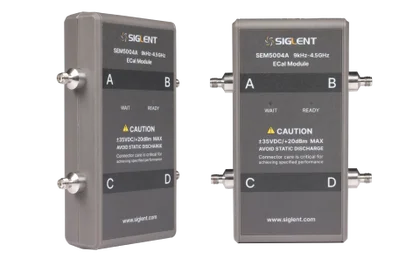
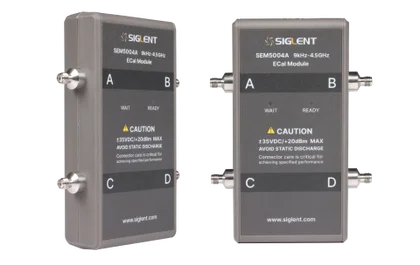
- Four ports in one operation. A mechanical four-port calibration is a genuinely tedious job of a dozen-plus connections; a four-port module does it in a single step.
- You will actually recalibrate. The honest argument for it: when calibration costs seconds people do it whenever the setup changes, rather than deciding the old one is probably still fine.
- Six to ten times the purchase price of the equivalent mechanical kit — which is why it earns its place on a busy analyser rather than an occasional one.
- It is an instrument, not an artefact. It needs a USB connection and analyser support, and its characterisation data has to be kept current.
Neither option is maintenance-free: an ECal module needs periodic recalibration exactly as mechanical standards need recharacterisation. Budget for it either way.
The cost nobody puts in the comparison: your test port
A calibration is not free for the instrument. Every standard you screw on is one more mating cycle on a precision test port, and connector wear is cumulative and invisible — the first symptom is usually a drifting return-loss figure, not a broken connector.
A two-port mechanical calibration costs your ports seven or more matings; an ECal module costs one per port. Calibrate daily for a year and that is the difference between a few hundred cycles and a few thousand. On a 26.5 GHz analyser, where a worn test port is a factory repair, that arithmetic is worth doing before the price comparison. Whichever you choose, a port saver in front of the port absorbs the wear for a fraction of either.
So which one?
you calibrate occasionally, the budget is the deciding factor, your quality system asks for physical standards, or you need a reference that works on any analyser regardless of firmware.
you calibrate often, more than one person uses the analyser, you work at four ports, or the instrument is expensive enough that saving thousands of connector cycles matters on its own.
the ECal for daily work, and a mechanical kit kept aside as the independent reference to check it against — which is exactly what you want when a result is ever questioned.
Type-N mechanical kits
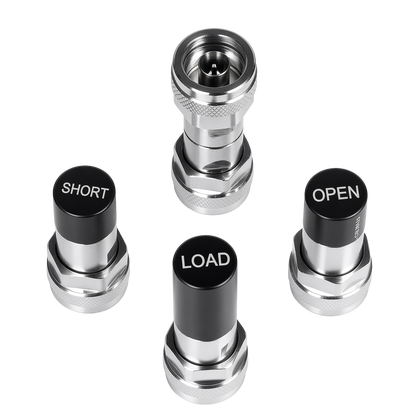
For the SNA5002A, SNA5012A, SNA5004A, SNA5014A and the SNA5000X-E, whose test ports are Type-N.
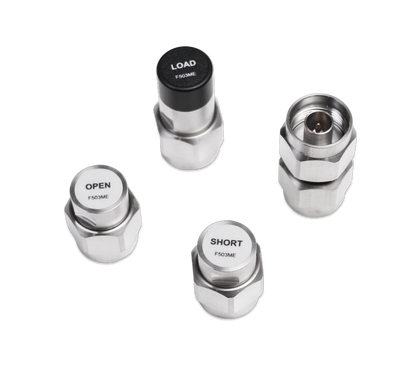
DC – 4.5 GHz
For the 4.5 GHz analysers.
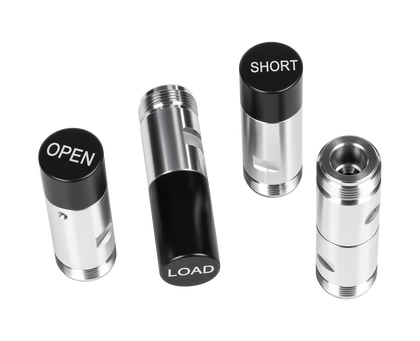
DC – 9 GHz
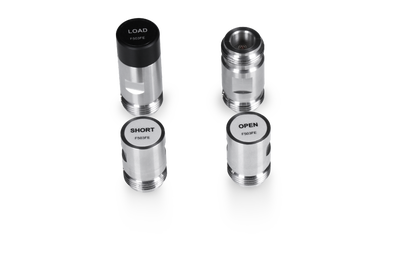
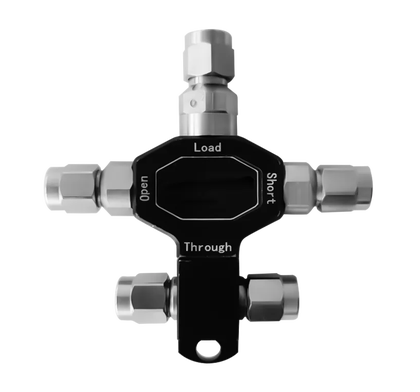
Covers the whole Type-N range, including the 8.5 and 9 GHz models. The Y kits hold the same standards in one integrated body.
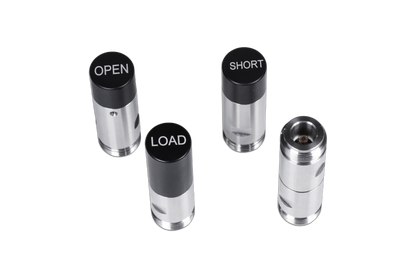
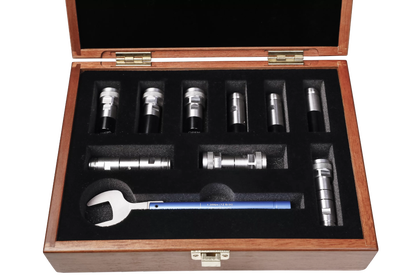
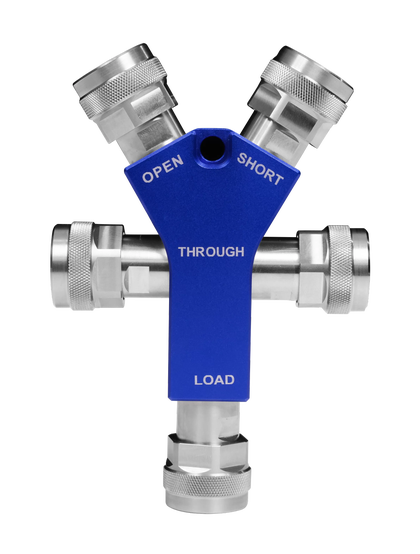
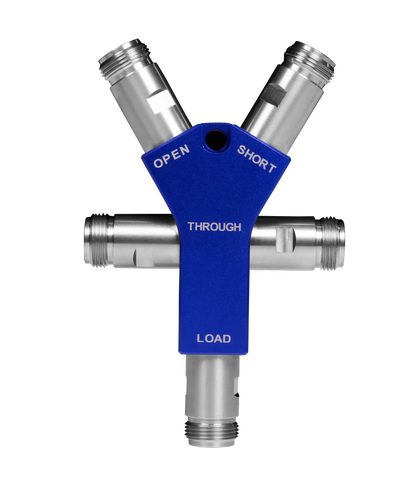
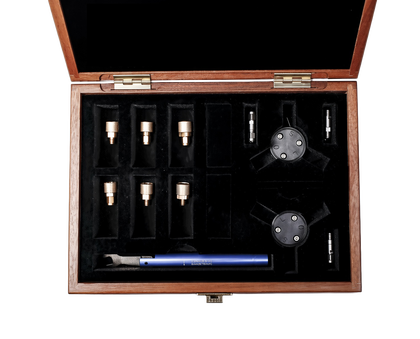
DC – 18 GHz
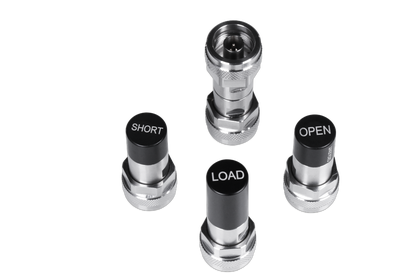
Headroom to the top of what a Type-N interface supports — for N-terminated work beyond the range of our own N-port analysers.
3.5 mm mechanical kits
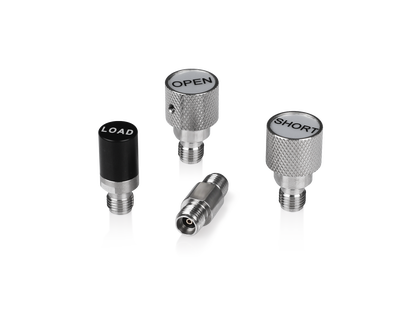
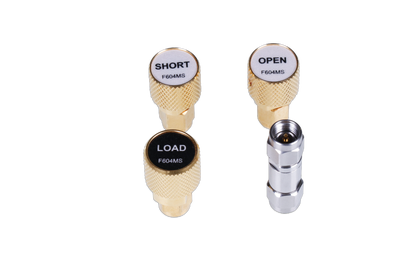
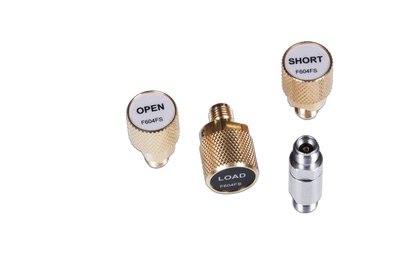
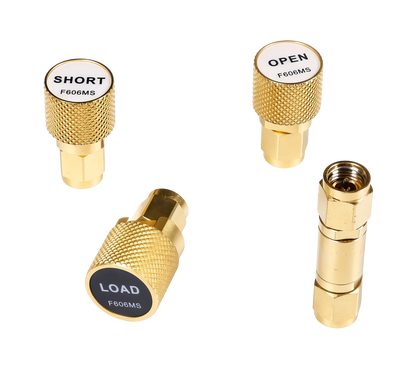
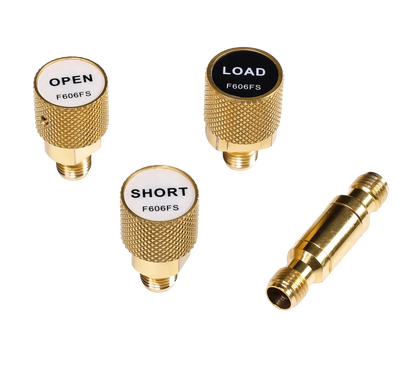
For the SNA5022A, SNA5032A and the 3.5 mm models of the SNA6000A range. An air-dielectric precision interface — and the reason these kits, rather than SMA ones, are what those analysers are specified with.
DC – 4.5 GHz
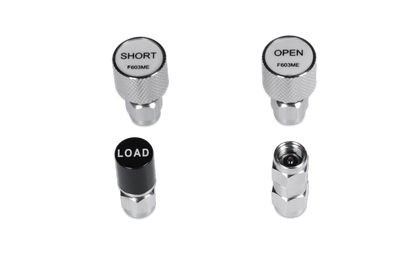
DC – 9 GHz
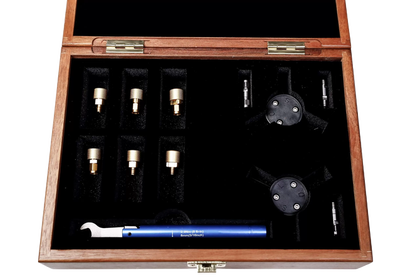
DC – 26.5 GHz
The kits for the SNA5032A and the top of the SNA6000A range.
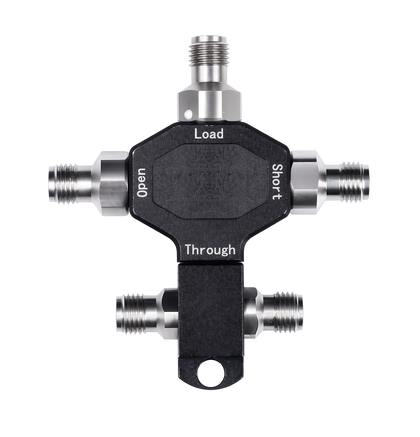
Waveguide
For K-band waveguide measurements, where a coaxial standard does not apply at all.
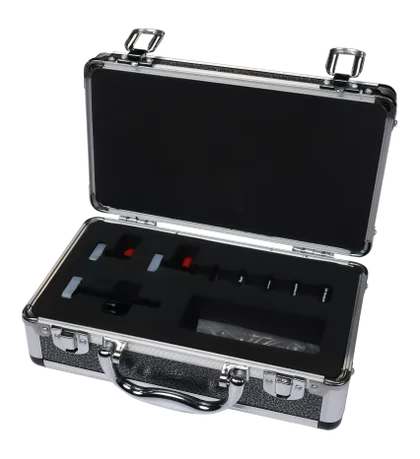
SEM5000A electronic calibrators
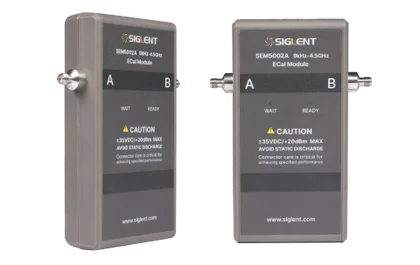
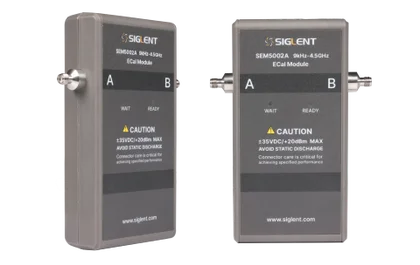
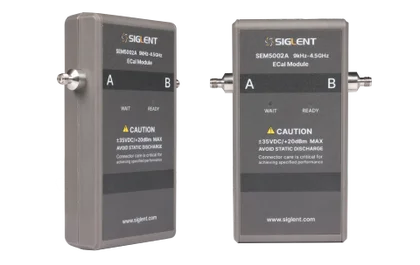
One module, one connection, and the analyser steps through every standard internally. A full two-port calibration takes seconds instead of minutes, there is no sequence to get wrong, and your test port sees one mating cycle instead of a dozen.
Two-port modules
Four-port modules
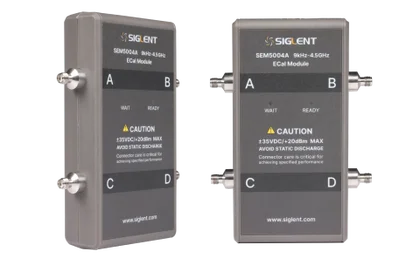
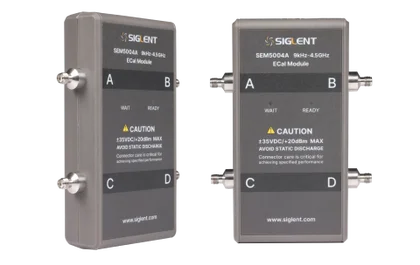
The whole range compared
All 21 mechanical kits, then all 8 electronic calibrators.
| Model | Connector | Gender | Range | Construction | Price |
|---|---|---|---|---|---|
| F503ME | N-type | male | DC – 4.5 GHz | Discrete | €339 |
| F503FE | N-type | female | DC – 4.5 GHz | Discrete | €339 |
| F504MS | N-type | male | DC – 9 GHz | Discrete | €1,269 |
| F504FS | N-type | female | DC – 9 GHz | Discrete | €1,269 |
| F504TS | N-type | male + female | DC – 9 GHz | Discrete | €1,659 |
| Y504MS | N-type | male | DC – 9 GHz | Integrated | €1,870 |
| Y504FS | N-type | female | DC – 9 GHz | Integrated | €1,870 |
| F505MS | N-type | male | DC – 18 GHz | Discrete | €2,280 |
| F505FS | N-type | female | DC – 18 GHz | Discrete | €2,280 |
| F505TS | N-type | male + female | DC – 18 GHz | Discrete | €4,020 |
| F603ME | 3.5 mm | male | DC – 4.5 GHz | Discrete | €419 |
| F603FE | 3.5 mm | female | DC – 4.5 GHz | Discrete | €419 |
| F604MS | 3.5 mm | male | DC – 9 GHz | Discrete | €1,499 |
| F604FS | 3.5 mm | female | DC – 9 GHz | Discrete | €1,499 |
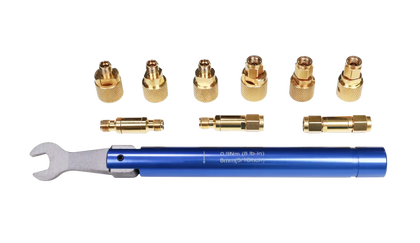
| F604TS | 3.5 mm | male + female | DC – 9 GHz | Discrete | €2,529 |
| F606MS | 3.5 mm | male | DC – 26.5 GHz | Discrete | €2,380 |
| F606FS | 3.5 mm | female | DC – 26.5 GHz | Discrete | €1,980 |
| F606TS | 3.5 mm | male + female | DC – 26.5 GHz | Discrete | €3,750 |
| Y606MS | 3.5 mm | male | DC – 26.5 GHz | Integrated | €2,780 |
| Y606FS | 3.5 mm | female | DC – 26.5 GHz | Integrated | €2,780 |
| KWR42A | Waveguide | WR-42 | DC – 18–26.5 GHz | Waveguide | €4,950 |
| Model | Ports | Range | Connector | Price |
|---|---|---|---|---|
| SEM5002A | 2 | 4.5 GHz | SMA female | €2,075 |
| SEM5012A | 2 | 9 GHz | SMA female | €2,622 |
| SEM5022A | 2 | 13.5 GHz | 3.5 mm female | €2,988 |
| SEM5032A | 2 | 26.5 GHz | 3.5 mm female | €3,902 |
| SEM5004A | 4 | 4.5 GHz | SMA female | €2,458 |
| SEM5014A | 4 | 9 GHz | SMA female | €4,286 |
| SEM5024A | 4 | 13.5 GHz | 3.5 mm female | €6,115 |
| SEM5034A | 4 | 26.5 GHz | 3.5 mm female | €9,772 |
Prices exclude VAT. Connector types and frequency ranges are from Siglent’s ordering information for the SNA5000A, SNA6000A and SNA5000X-E.
Frequently asked questions
What does OSLT mean?
Open, Short, Load and Through — the four known standards a vector network analyser measures in order to work out what your cables and connectors are doing. Once it knows, it subtracts them from every subsequent sweep. Every kit on this page provides all four.
Mechanical or electronic?
A mechanical kit is a set of precision standards you connect one at a time; an ECal module is a single box you connect once and leave. Electronic is faster and puts far fewer wear cycles on your test port; mechanical costs a fraction as much and needs no USB or firmware support. The full comparison is above, including the one cost that is usually left out of it.
What is the difference between the F and Y kits?
Nothing electrical. Siglent’s own description is that the Y kit “shares the same parts and specs” as the equivalent F kit “but in integrated exterior”. The F series gives you the standards as separate pieces; the Y series holds them in one body. Fewer loose parts to fumble or lose mid-calibration, which is what the price difference buys.
Male, female, or both?
A calibration standard has to mate with the interface you are calibrating to, so the kit’s gender must be the opposite of your cable end. The TS kits contain both genders and cover a two-port measurement where the two ends differ — which is the common case, and why they exist.
Which connector do I need — N or 3.5 mm?
It is decided by your analyser’s test ports, not by preference. The SNA5002A, SNA5012A, SNA5004A, SNA5014A and the SNA5000X-E use Type-N; the SNA5022A, SNA5032A and the 3.5 mm SNA6000A models use 3.5 mm NMD. The table above lists them.
Can I calibrate with an SMA kit instead of 3.5 mm?
They mate mechanically, so it will physically work — but a calibration is only as good as the standards behind it. A 3.5 mm standard is an air-dielectric precision part with defined characteristics that the correction maths depends on; SMA is a PTFE-filled connector built to a looser tolerance. If the measurement matters, match the kit to the port.
Tell us your analyser and we will name the kit
The choice comes down to three things — your test-port connector, your top frequency, and the gender of the cables you calibrate to. Send us the model and we will tell you exactly which kit fits, and whether an ECal module would serve you better.
We also provide ISO and DKD/DAkkS calibration for your instruments — see calibration services.