

Siglent SPD1168X 0 to 16V / 0 to 8Amp Single output power supply


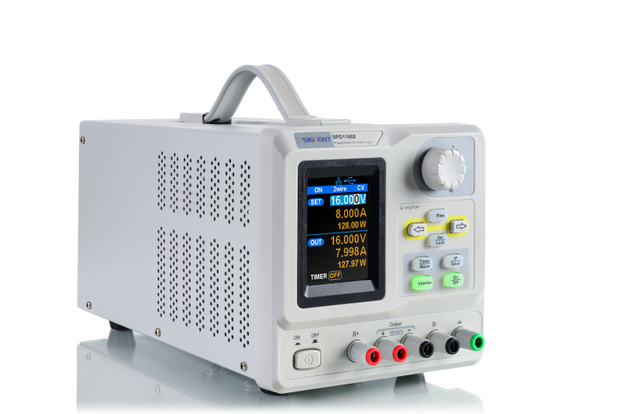
Siglent's SPD1168X Programmable Linear DC Power Supply has a 2.8inch TFT-LCD display, features remote computer control capability, and real time wave display. This single output design is focused on delivering high performance and ease-of-use in a small package
SPD1168X — 0 – 16 V / 0 – 8 A linear power supply
The SPD1168X packs 8 amps of clean linear power into a compact single-output bench supply: 0–16 V and 0–8 A set with 1 mV / 1 mA resolution on a bright TFT display, with the low ripple only a linear stage delivers — the current-friendly choice for motors, LEDs, charging circuits and power-hungry embedded boards.
It behaves like a programmable instrument, not a wall of knobs: a five-step timer sequences voltage and current profiles, the real-time waveform view plots the output as it changes, five internal setups store and recall complete configurations, and remote sense (4-wire) compensates lead drop at high currents. USB and LAN are standard with SCPI remote control and the free EasyPower software; OVP, OCP and OTP protections guard the device under test.
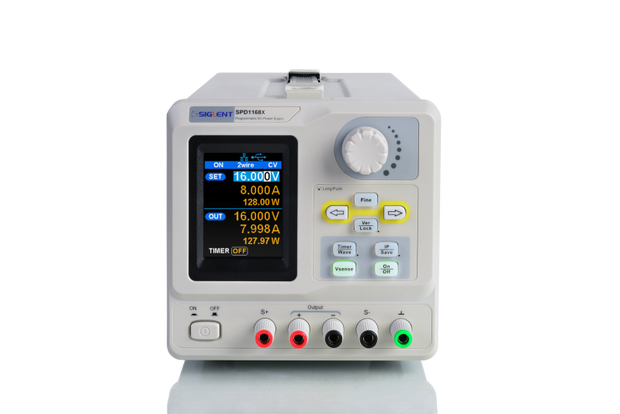
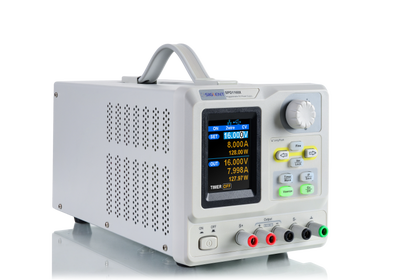
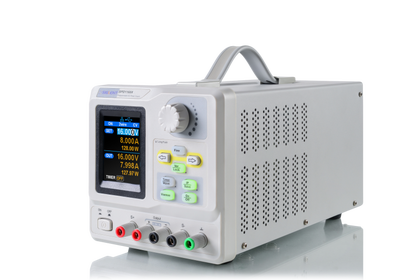
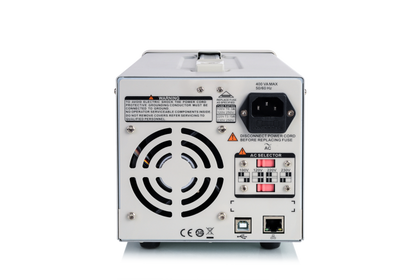
Every angle
The SPD1168X up close — note the USB and LAN ports standard on the rear.
Why linear still wins on the bench
Measured proof and working tools — not brochure claims.
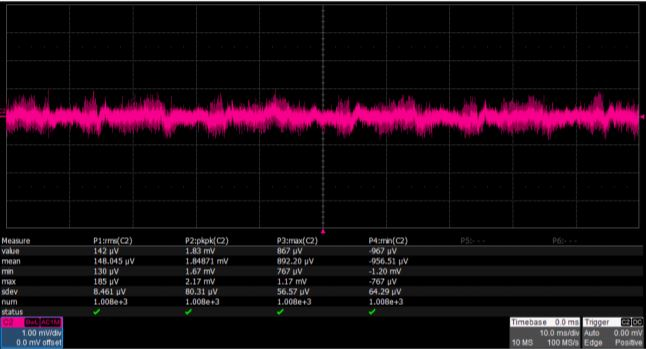
Ripple you have to zoom in to find
This is the actual output on an oscilloscope: linear regulation keeps ripple and noise down in the hundreds of microvolts, with none of the switching hash a cheap SMPS bench supply sprays across your measurements. For ADC references, sensor front-ends, audio stages and RF bias, that quietness is the whole point — what you measure is your circuit, not the supply.
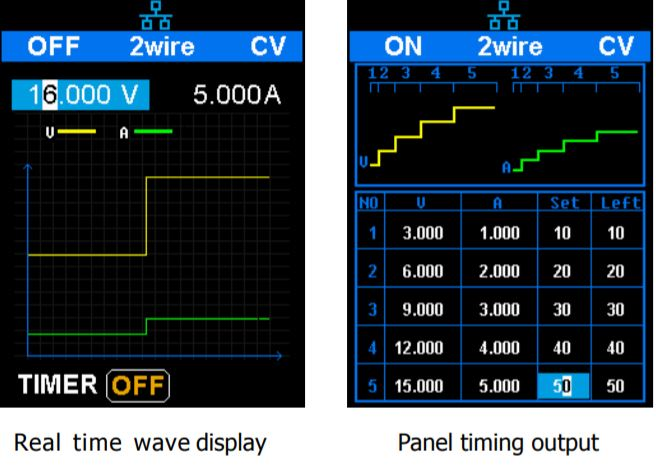
A timer that runs real test sequences
Program up to five steps of voltage, current and duration and the supply executes them standalone — power-cycle endurance, brown-out simulation, staged charging profiles. The real-time waveform view plots the output as it steps, so you see the sequence happen instead of trusting it did. EasyPower extends the same idea on the PC with longer sequences and logging.
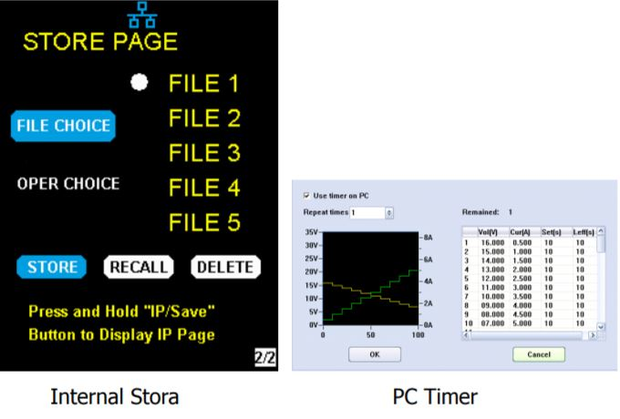
Store, recall & EasyPower
Five internal memories hold complete setups — voltage, current, limits, timer — recalled in two presses. The free EasyPower software adds PC-side control, sequencing and logging over USB or LAN.
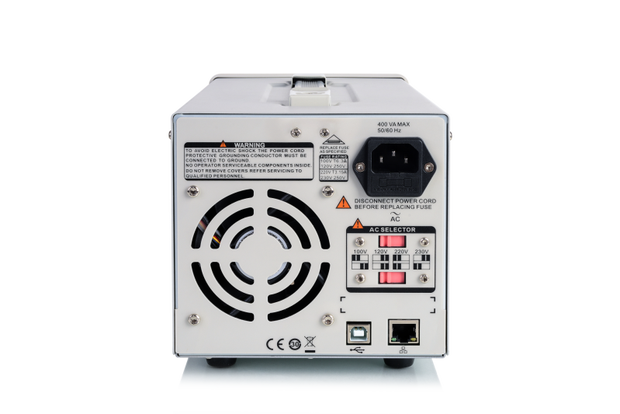
USB & LAN standard — automation ready
Both interfaces ship on every unit: script the supply with SCPI from any environment, drive sequences from EasyPower, or drop it into a LAN-connected test rack — no options, no adapters.
Key features
- 0 – 16 V / 0 – 8 A single output — 128 W of linear-regulated power
- 1 mV / 1 mA programming resolution on a bright TFT display with live V/A/W readout
- Linear topology: ripple and noise down in the hundreds of microvolts — no switching hash on your DUT
- Five-step timer sequences voltage & current profiles · real-time output waveform view
- Remote sense (4-wire) compensates lead drop at the load · 2-wire for quick setups
- OVP, OCP and OTP protections with hard limits you set before connecting
- USB and LAN standard — SCPI remote control plus the free EasyPower PC software
- Five internal setup memories for instant store & recall of complete configurations
Application examples
Powering current-hungry prototypes
Eight amps at logic voltages covers motor drivers, LED strips, RF power stages and multi-rail boards fed through regulators — with remote sense keeping the voltage at the load exact even when the leads drop tens of millivolts.
Battery & charging development
Set precise charge voltages with 1 mV resolution, limit current to the cell's specification, and watch the live waveform view as the device switches between charge phases — with OVP as the safety net.
Automated test sequences
The five-step timer steps voltage and current profiles without a PC — power-cycle endurance tests, brown-out simulation and stress sequences run standalone, or scripted over USB/LAN with SCPI and EasyPower.
Clean supply for sensitive analog
Linear regulation keeps ripple down in the hundreds of microvolts, so ADC references, sensor front-ends and audio stages are measured on their own merits — not on switching noise from the bench supply.
Education and service
Simple front-panel operation with hard current limits makes it safe for students and unknown boards alike, while store/recall brings back the exact setup for repeatable exercises and repairs.
Specifications
| Output | 0 – 16 V / 0 – 8 A · single channel · 128 W |
| Regulation | Linear mode — low ripple & noise (hundreds of µV region) |
| Setting resolution | 1 mV / 1 mA |
| Display | TFT colour display · V / A / W readout · real-time waveform view |
| Timer | 5-step programmable V/I sequences · PC timer via EasyPower |
| Sense | 2-wire and 4-wire (remote sense) operation |
| Protection | OVP · OCP · OTP |
| Memories | 5 internal setup stores (store / recall / delete) |
| Connectivity | USB Device · LAN · SCPI remote control |
| PC software | EasyPower — control, sequencing, logging (free download below) |
From the official SPD1000X datasheet; subject to change, errors & omissions excepted.
In the box
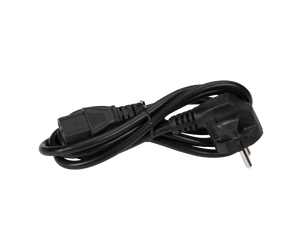
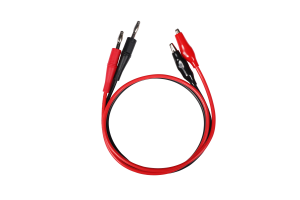
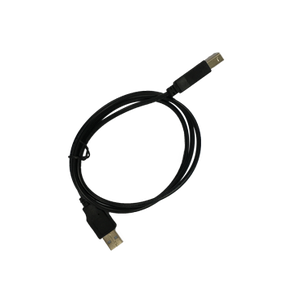
Everything included as standard with your SPD1168X.
Accessories & related
Need more voltage? The SPD1305X delivers 0 – 30 V / 0 – 5 A for €249.00.
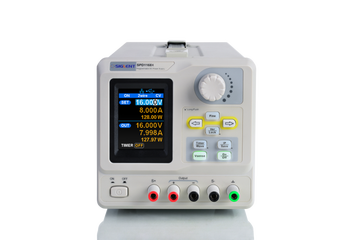
The same instrument with a wider voltage range — 0 – 30 V / 0 – 5 A for 24 V industrial and amplifier work.
The SPD3303 series delivers three outputs for multi-rail work — see the full power-supply range for every channel count and wattage.
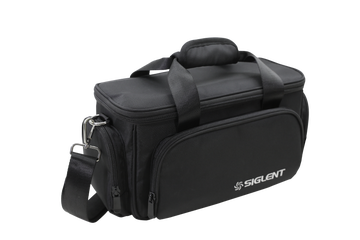
Leads, adapters, cases and more for your Siglent bench.
Compare the full power-supply range
Linear and switching, one to three channels, 128 W to kilowatts — or ask us to match a supply to your application.