

TekBox TBPS01-TBWA2 EMC Near-Field Probe Set (H20, H10, H5, E5) with TBWA2 20 dB / 40 dB Wideband Amplifier
TekBox TBPS01-TBWA2: H20, H10, H5 and E5 near-field probes with a 20 or 40 dB USB-powered preamplifier, 2 MHz to 6 GHz. Find where your board radiates.
TBPS01-TBWA2 — four near-field probes and a 2 MHz to 6 GHz preamplifier, for finding where a board radiates
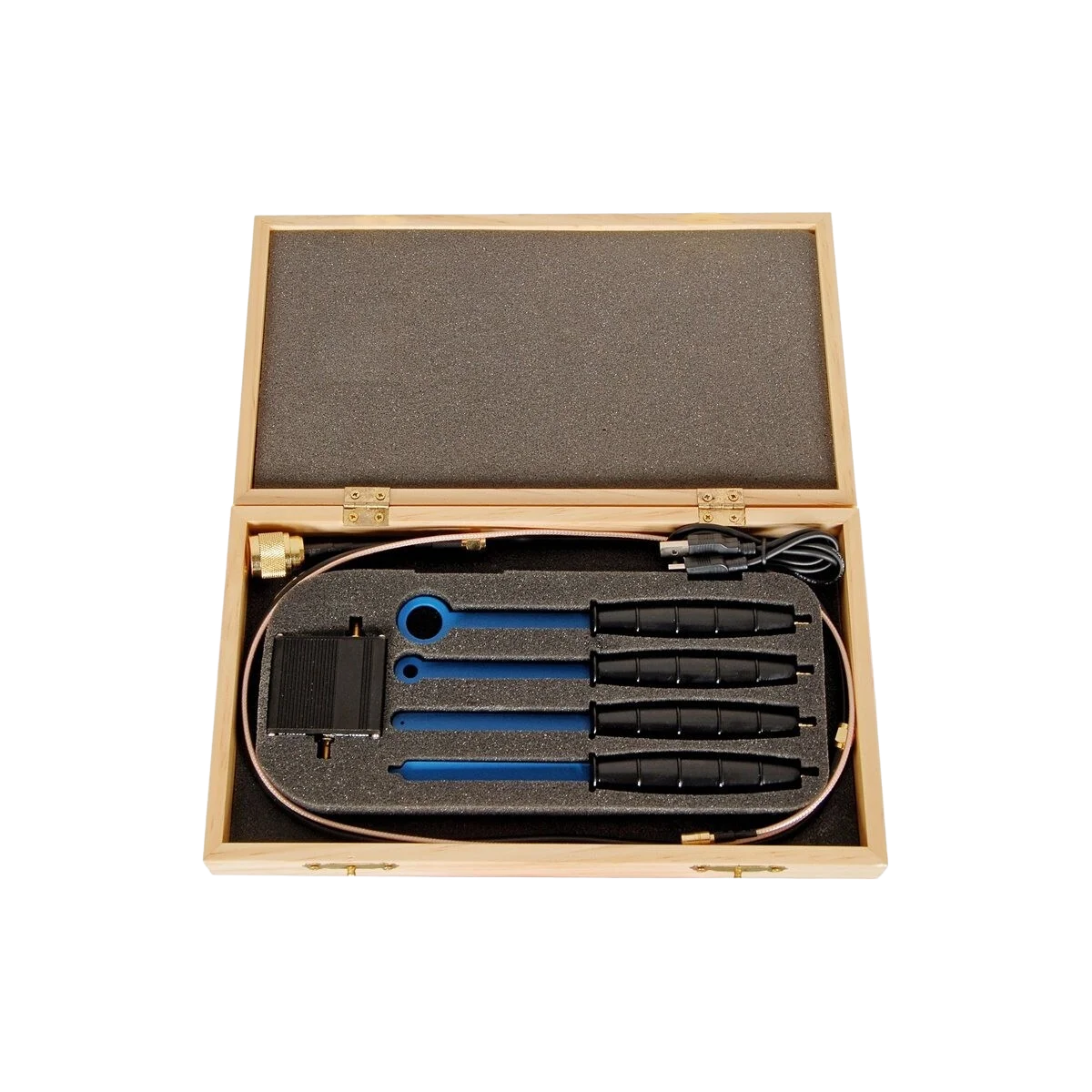
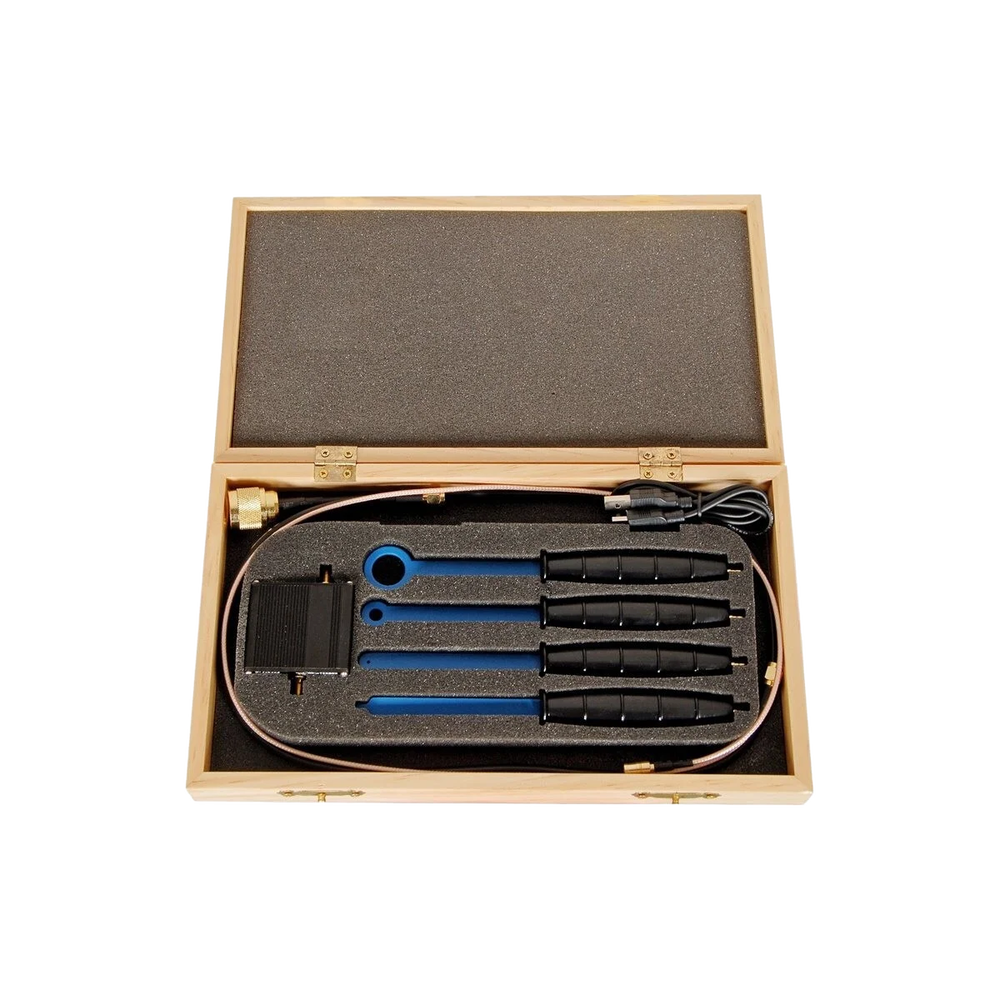
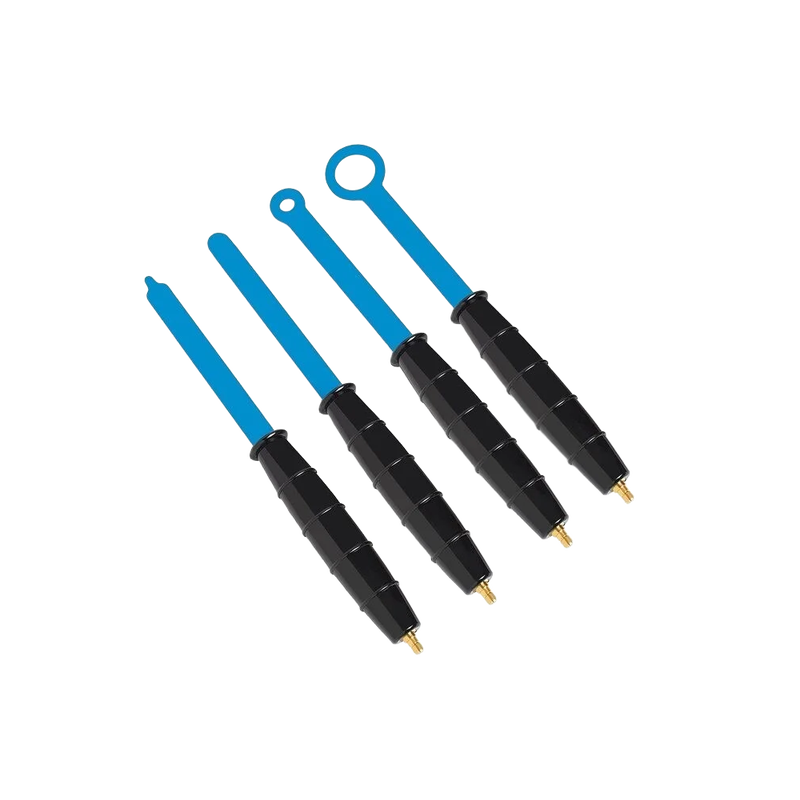
Three shielded H-field loops of 20, 10 and 5 mm and one E-field probe, 170 mm long on SMB connectors, with the TBWA2 wideband amplifier in 20 dB or 40 dB and every cable needed to reach the N input of a spectrum analyser. The amplifier is powered from the analyser’s USB port. Delivered in a wooden case with the measured coupling-loss plots.
A TEM cell or a test house tells you which frequency is too strong. The probes tell you where it comes from. Scan the H20 over the board with the analyser on max hold and the emission shows up as the probe passes its source; switch to the H10, then the H5, and the source narrows to a component, a via or a single trace. The E5 does the same for the high-impedance nodes the loops miss. The loops are shielded against common-mode pick-up and insensitive to the hand holding them.
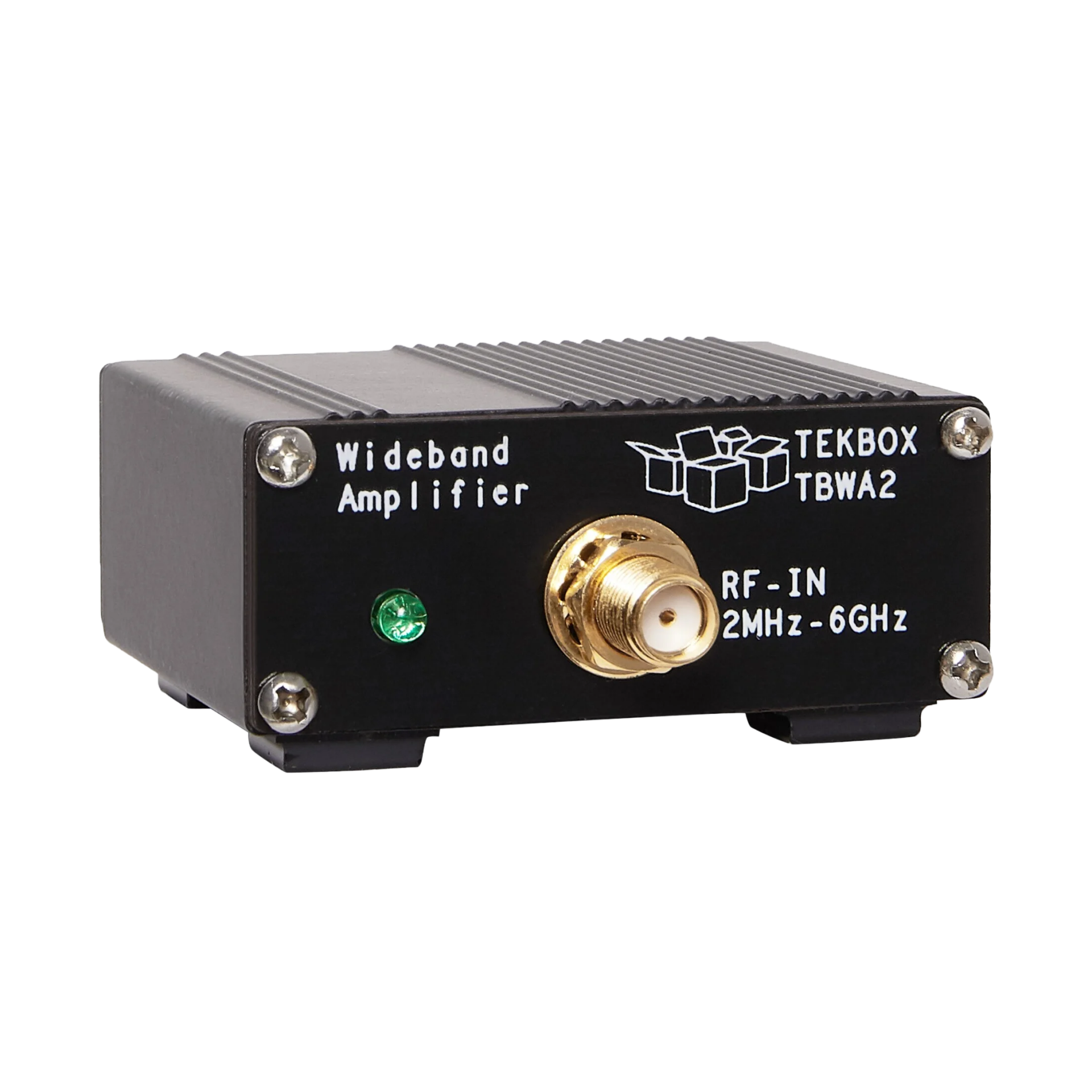
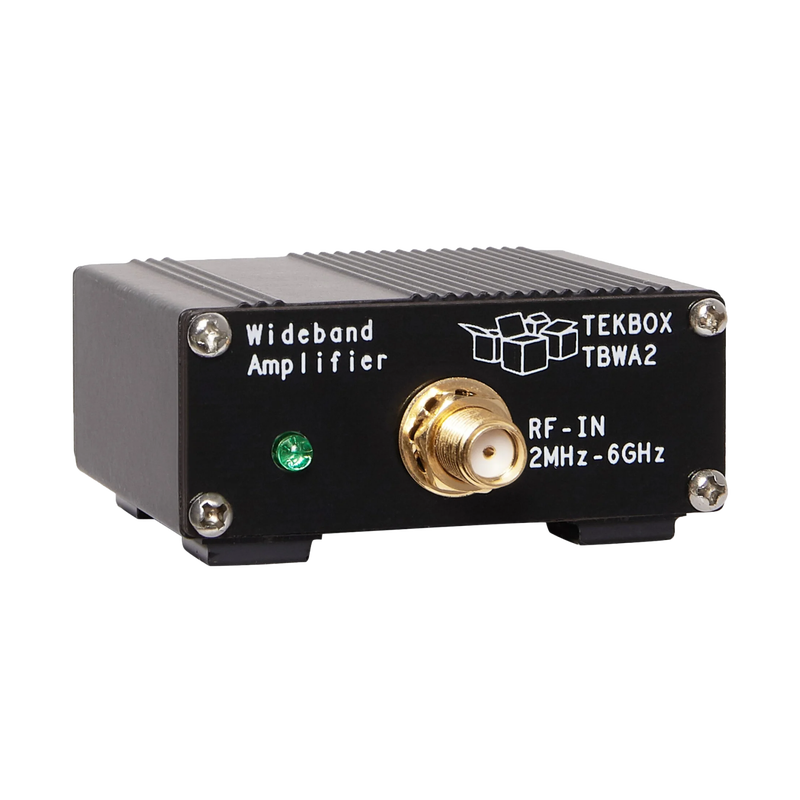
Near-field probes deliver very little signal, which is why the set includes the amplifier. The 20 dB version (TBWA2/20dB) takes up to +10 dBm in and suits an analyser with its own preamplifier or boards with strong emissions; the 40 dB version (TBWA2/40dB) is for the quietest emissions and for analysers without a preamplifier, and must not see more than −10 dBm at its input. Both are flat within half a dB from 10 MHz to 1 GHz and about 5 dB down at 6 GHz.
The four probes, and when to pick which
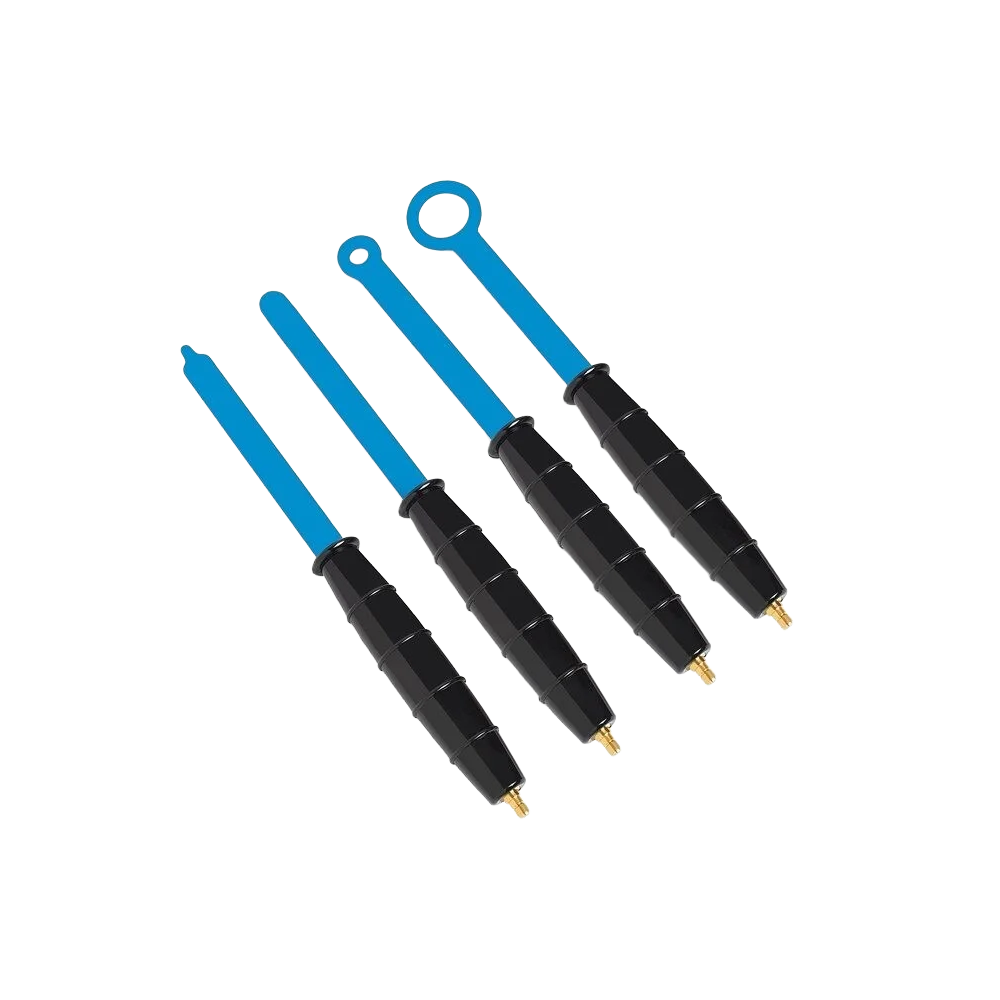
All four are 170 mm long, coated, and end in an SMB connector so the cable does not twist while scanning. Frequency range up to 6 GHz; the coupling-loss plots for each probe are in the manual and in the case.
| Probe | Type | When to use it |
|---|---|---|
| H20 | H-field loop, 20 mm | Lowest coupling loss below 1 GHz: the overview probe for the first scan of a board or an enclosure. Resonances near 1.3 and 4 GHz. |
| H10 | H-field loop, 10 mm | Narrows the source down to a group of components or a trace. Resonance near 3.1 GHz. |
| H5 | H-field loop, 5 mm | Best spatial resolution: a single pin, via or trace. Above 1 GHz all three loops couple about equally, so this is the one to use there. |
| E5 | E-field probe, 5 mm tip | Picks up voltage rather than current: high-impedance nodes, trace ends, pins and apertures where the loops see little. |
Four jobs it does on a Siglent bench
Locate the emitter
The emission the TEM cell or the test house flagged: find the switching regulator, clock trace or connector that radiates it, loop by loop, in minutes.
Trace a signal chain without loading it
Hold the probe over a filter, an oscillator or a modulator and read level and spectrum at the analyser, without a 50 Ω load or a probe tip touching the circuit.
Poke for susceptibility
Feed RF into the probe from a generator and move it over the board. Where the firmware hiccups or the output jumps, that circuit section is the one to harden.
Check enclosures and cables
Run the H20 along seams, apertures and cable exits of a housing: the gap that leaks is the one where the trace rises.
The TBWA2 amplifier: 20 dB or 40 dB
Gain of the two versions from TekBox’s measurements, and how to choose. Both are 50 Ω SMA in and out, powered through a mini-USB-B socket from the analyser’s USB port. The set is sold in two versions — click one and it is set in the order box at the top of the page.
| Gain (dB) | 1 MHz | 10 MHz | 100 MHz | 500 MHz | 1 GHz | 2 GHz | 3 GHz | 4.5 GHz | 6 GHz |
|---|---|---|---|---|---|---|---|---|---|
| TBWA2/20dB | 14.8 | 20.2 | 20.2 | 20 | 19.8 | 19 | 17.6 | 17.4 | 15.4 |
| TBWA2/40dB | 30 | 40.2 | 40.2 | 40 | 39.5 | 37.6 | 36.4 | 34.6 | 34.7 |
Selected version: TBPS01-TBWA2/20dB. Please confirm the version you want in the order box at the top of the page, or mention it when you order.
Probe into the amplifier input with the SMB-to-SMA cable, amplifier output to the analyser’s N input with the SMA-to-N cable, USB cable from the analyser to the amplifier. Without the amplifier: input attenuation 0 dB and internal preamplifier on. Reducing span, resolution bandwidth and video bandwidth buys more sensitivity either way.
TekBox’s warning: do not probe circuits carrying more than 75 V DC or 50 V AC. The probes are coated, but a sharp edge can cut the insulation. For mains-side circuits measure on the isolated side or in the TEM cell.
Specification
| Order codes | TBPS01-TBWA2/20dB · TBPS01-TBWA2/40dB (TekBox) |
| Probes | H20, H10, H5 (H-field, shielded loops 20 / 10 / 5 mm) and E5 (E-field, 5 mm tip); 170 mm long, coated, SMB connectors |
| Probe frequency range | Up to 6 GHz — see the coupling-loss plots per probe |
| Amplifier | TBWA2/20dB or TBWA2/40dB, 50 Ω SMA in and out, 48 × 63 × 20 mm |
| Amplifier gain | 20.2 dB / 40.2 dB at 10 MHz to 100 MHz; 19.8 / 39.5 dB at 1 GHz; 15.4 / 34.7 dB at 6 GHz (table above) |
| Maximum input | +10 dBm (20 dB) · −10 dBm (40 dB) |
| Output 1 dB compression | +20 dBm at 2 GHz (both) |
| Noise figure at 2 GHz | 4.5 to 5 dB (20 dB) · 5 dB (40 dB) |
| Reverse isolation | 23 dB (20 dB) · 40 dB (40 dB), 0.1 to 6 GHz |
| Supply | 4.5 to 5 V via mini-USB-B, typically 110 mA (20 dB) or 210 mA (40 dB); 5.5 V maximum |
| Delivered | 4 probes, TBWA2 amplifier, 75 cm SMB-to-SMA cable, 75 cm SMA-to-N cable, SMA-female to N-male adaptor, USB cable, measurement plots, wooden case |
| Voltage limit on the DUT | 75 V DC / 50 V AC rms |
From the TekBox TBPS01/TBWA2 manual V2.2 and the TBWA2 manual V1.3. The amplifier’s own panel marking is 2 MHz to 6 GHz; TekBox’s plots run from 30 kHz.
The other TekBox products we stock
Everything from TekBox on siglent.eu, chosen to work with Siglent spectrum analysers. The TekBox category page explains how they fit together.
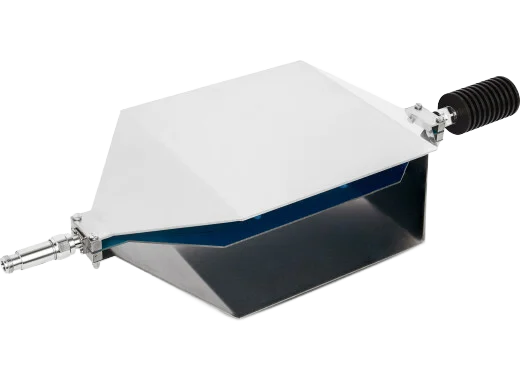
Radiated emissions and immunity on the bench. 50 mm septum, room for a 19 × 13 × 5 cm board, usable to 3 GHz. 25 W termination and DC block included.
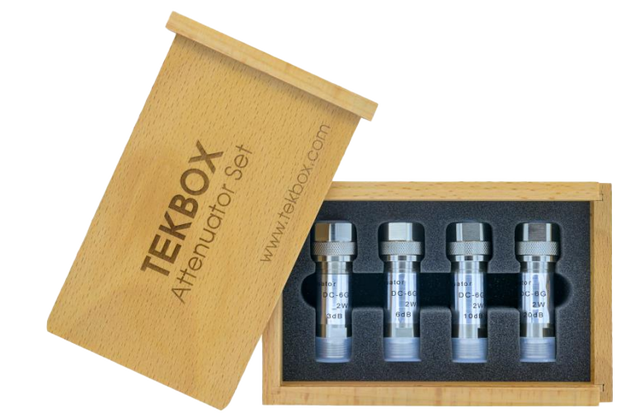
3, 6, 10 and 20 dB N-type attenuators, DC to 6 GHz, 2 W, VSWR below 1.2, in a beech-wood box. Fifteen values from 3 to 39 dB when stacked.
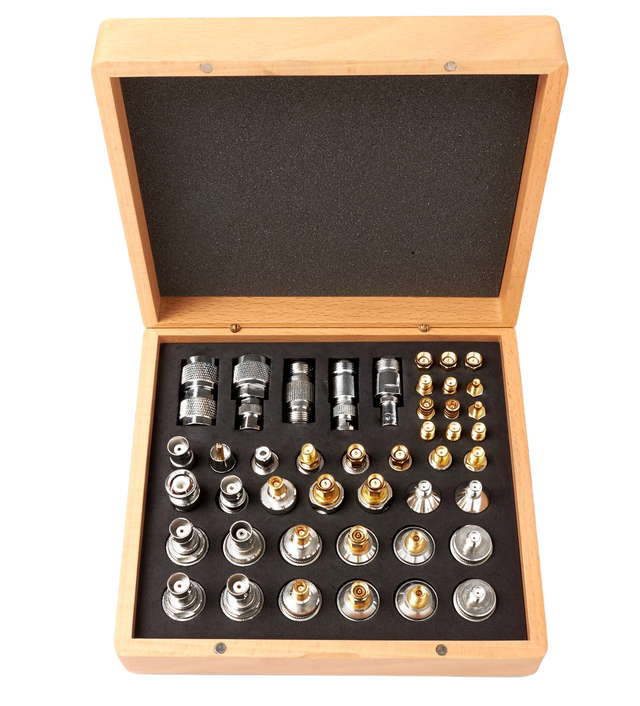
44 adaptors in 25 types between N, SMA, BNC, SMB and RCA, all 50 Ω, N and SMA rated to 6 GHz, in a beech-wood box.
Seven pieces: BNC to 4 mm banana plugs and jacks, BNC to screw terminal block, and a 50 Ω feed-through termination.
Prices ex VAT.
Questions about the TBPS01-TBWA2
20 dB or 40 dB?
20 dB if your analyser has a preamplifier — all current Siglent SSA models do — or if the boards you test radiate strongly: it tolerates +10 dBm at its input and has the better linearity. 40 dB if you hunt very weak emissions or use a receiver without a preamplifier, and can keep the input below −10 dBm. Many labs end up with both; the amplifier is the only difference between the two sets.
Can I use the probes without the amplifier?
Yes. Connect the SMB-to-SMA cable through the SMA-to-N adaptor straight to the analyser, set attenuation to 0 dB and switch the analyser’s preamplifier on. TekBox also sells the probes alone as the TBPS01; ask us if you do not want the amplifier.
Is the reading an absolute field strength?
No. Near-field probes are for finding and comparing sources, not for measuring field strength; the coupling-loss plots TekBox supplies show how each probe responds over frequency. For a quantitative figure measure the whole board in the TBTC1 TEM cell.
Why SMB connectors on the probes?
SMB is a push-on connector that rotates freely, so the cable does not twist and tug while you scan a board. The 75 cm SMB-to-SMA cable in the set is the matching lead.
How is the amplifier powered?
From any USB port through the supplied cable: 4.5 to 5 V at 110 mA (20 dB) or 210 mA (40 dB). The USB host port on the front of a Siglent SSA does it, so nothing else needs a socket.
Which Siglent instruments work with the set?
Any SSA3000X, SSA3000X Plus, SSA3000X-R, SSA5000A or SVA1000X — the SMA-to-N cable fits their N input directly. Below a few tens of MHz an SDS oscilloscope’s FFT will also show what the probe picks up, which is handy for switching-regulator work.
Building an EMC debugging bench?
Probes to find the source, the TBTC1 cell to measure the result, and a Siglent analyser with the EMI option to read it the way the test house will. We quote the set together.