

Siglent SNA6000-HPR high-performance OCXO reference module (hardware)
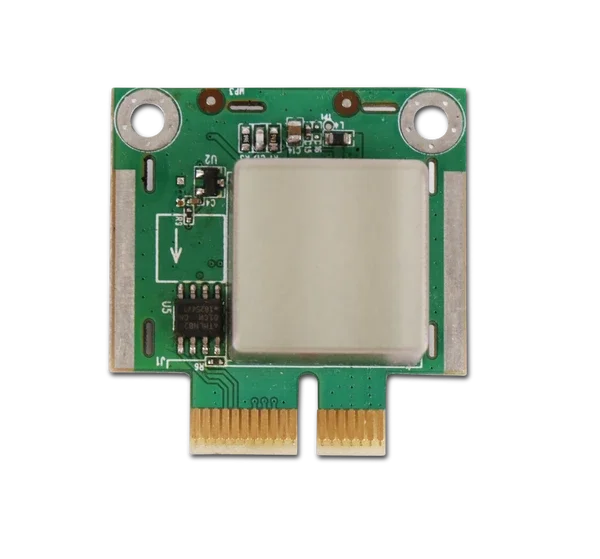
High-performance OCXO reference for the SNA6000A VNA: ±1 ppb stability over 0–40 °C, ±0.1 ppm CW accuracy, ±50 ppb/year ageing. Plug-in module.
SNA6000-HPR — high-performance OCXO reference
An oven-controlled crystal reference for the SNA6000A: ±1 ppb stability over 0–40 °C instead of ±1 ppm, and ±0.1 ppm CW frequency accuracy instead of ±1 ppm.
Every frequency the SNA6000A generates or measures is derived from one internal reference. The standard reference holds ±1 ppm — 26.5 kHz at the top of the range. The HPR module replaces it with an OCXO: the crystal sits in a temperature-controlled oven, so it drifts a thousand times less with temperature and ages ten times more slowly. It is a plug-in card for the rear slot, fitted by the user.
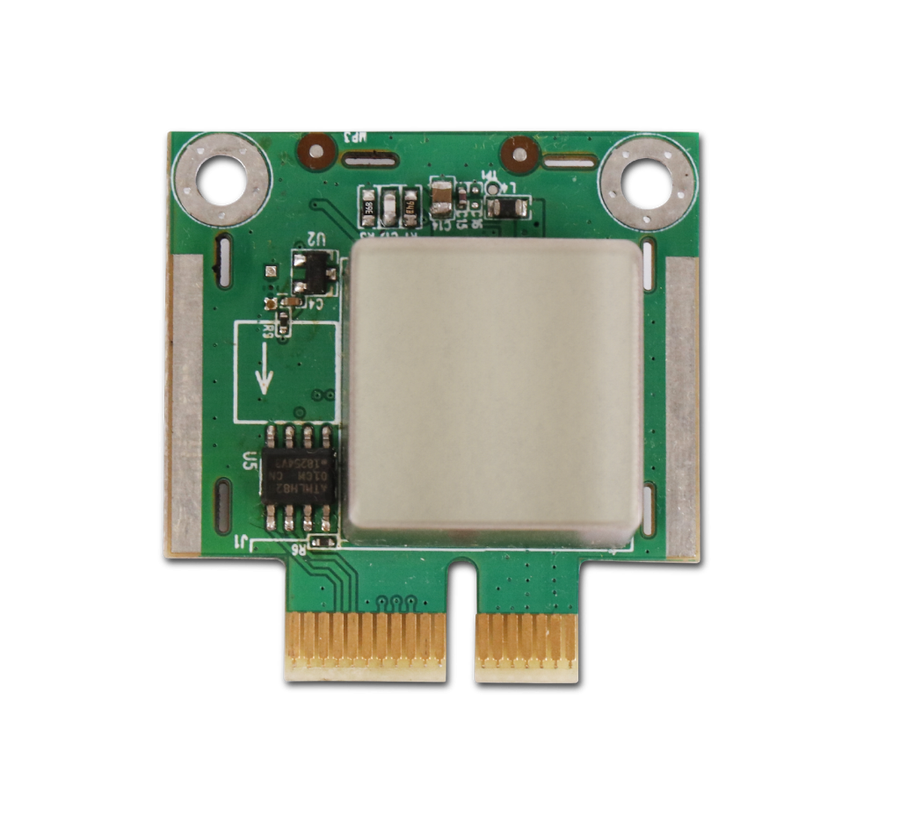
What this option does
What it does
Tightens CW frequency accuracy from ±1.0 to ±0.1 ppm, stability over 0–40 °C from ±1.0 ppm to ±1 ppb, and ageing from ±0.5 ppm to ±50 ppb per year.
What you use it for
Narrow-band resonators and filters, frequency-offset and mixer measurements, long unattended runs and production limit tests — anywhere the frequency axis itself has to be trusted, without an external lab reference.
In practice
A 10 GHz dielectric resonator with a Q in the thousands has a 3 dB bandwidth of a few megahertz. A 1 ppm reference error is 10 kHz at that frequency — visible in a limit test that runs all day in a warming room. With the OCXO the same error is a few hertz.
Hardware, not a licence key. A plug-in module for the OCXO slot on the rear of the analyser, fitted by the user in a few minutes (user manual 5.5): switch the analyser off, remove the cover over the OCXO slot with a screwdriver, insert the module and secure it with its screws, then switch on — the reference is in use straight away. If your lab already distributes a 10 MHz reference (GPS-disciplined or rubidium), the analyser’s rear reference input may be all you need. Give the OCXO time to warm up after switching on before you rely on its full stability.
What the OCXO changes
CW accuracy
±0.1 ppm instead of ±1.0 ppm at 23 ± 3 °C.
Temperature stability
±1 ppb over 0–40 °C instead of ±1.0 ppm — a thousand times tighter.
Ageing
±50 ppb per year instead of ±0.5 ppm per year.
Plug-in module
Fits the OCXO slot on the rear panel; no tools beyond a screwdriver.
External reference in
10 MHz ±10 ppm, −3 to +10 dBm, 50 Ω BNC — the alternative when a lab reference is available.
Reference out
10 MHz sine, 0 dBm, 50 Ω BNC, to lock other instruments to the analyser.
Mixer and offset work
Source and receivers share the reference, so frequency-offset and SMM measurements inherit its stability.
Long runs
Frequency no longer walks with room temperature through a day of automated testing.
Specification
From the SNA6000A data sheet and user manual.
| Standard reference | With SNA6000-HPR | |
|---|---|---|
| CW frequency accuracy (23 ± 3 °C) | ±1.0 ppm | ±0.1 ppm |
| Stability, 0–40 °C | ±1.0 ppm | ±1 ppb |
| Ageing per year | ±0.5 ppm | ±50 ppb |
| Ageing over 20 years | ±3.0 ppm | not stated |
| Error at 26.5 GHz from temperature (0–40 °C) | up to ±26.5 kHz | up to ±26.5 Hz |
| Frequency resolution | 1 Hz | 1 Hz |
| External reference input | BNC female, 10 MHz ±10 ppm, −3 to +10 dBm, 50 Ω | |
| Reference output | BNC female, 10 MHz sine, 0 dBm ±3 dB into 50 Ω | |
| Installation | Rear OCXO slot, user-installable (user manual 5.5) | |
Compatibility and activation
Fits all eight SNA6000A models.
A plug-in module for the OCXO slot on the rear of the analyser, fitted by the user in a few minutes (user manual 5.5): switch the analyser off, remove the cover over the OCXO slot with a screwdriver, insert the module and secure it with its screws, then switch on — the reference is in use straight away.
Goes with
Questions about SNA6000-HPR
Is this a licence key?
No. SNA6000-HPR is a hardware module: an oven-controlled crystal oscillator on a plug-in card.
Can I fit it myself?
Yes. Switch the analyser off, remove the cover over the OCXO slot on the rear panel, insert the module, secure it with its screws and switch on. No calibration step is described by Siglent.
What does ±1 ppb mean at my frequency?
One part per billion: ±10 Hz at 10 GHz, ±26.5 Hz at 26.5 GHz. The standard ±1 ppm reference allows a thousand times that.
We already have a 10 MHz lab reference. Do I need it?
Perhaps not. The SNA6000A accepts an external 10 MHz reference on its rear BNC input. The HPR is for analysers that move between benches, go on site, or must not depend on a lab distribution system.
Is it the same module as the SNA5000-HPR?
No. The SNA5000-HPR is a separate product for the SNA5000 series. Order SNA6000-HPR for an SNA6000A.
Does it change the reference output?
The rear 10 MHz output lets other instruments lock to the analyser. Siglent specifies that output at ±1 ppm; ask us if you need to rely on it at OCXO accuracy.
Can I return it?
Yes. It is a physical module, so the normal 14-day EU return right applies.
Planning an SNA6000A measurement?
Tell us the device, the frequency range and what you need to measure. We will confirm the model, the options and the calibration you need before you order.