

Current probes
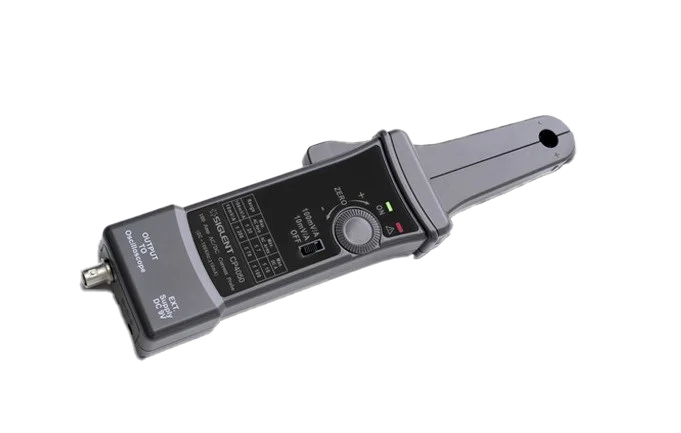
Fourteen clamp-on probes from €299 to €5,345 — 200 kHz to 100 MHz, 50 A to 750 A peak. All of them read AC and DC, and all of them leave the circuit intact.
One number, or the whole waveform
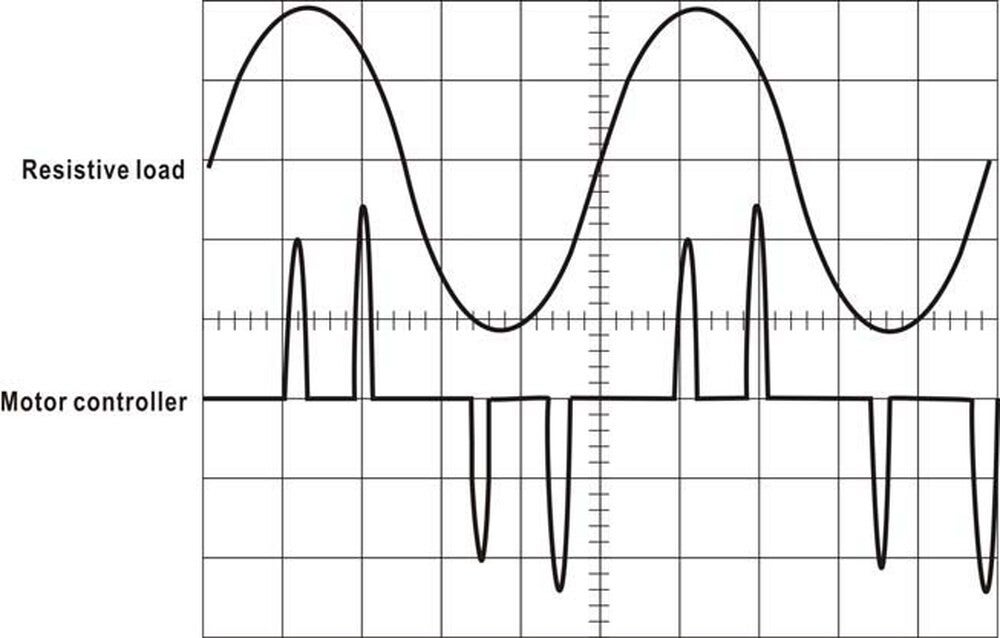
A clamp meter reports a single RMS figure averaged over many cycles. Two loads can return almost the same reading while one of them peaks three times higher — a resistive heater draws a clean sine, a motor controller draws narrow spikes on the same average current. The meter cannot tell you which you have.
A current probe puts the shape on your oscilloscope instead. It clamps around the conductor, so the circuit stays intact — no shunt to insert, no burden resistance added to the thing you are trying to characterise. Every probe here is Hall-effect based, so it reads DC as well as AC: battery current, DC bus current, the standing draw in a supply rail.
The output is a voltage on a plain BNC at a stated mV per amp, which means any oscilloscope of any brand will do the job.
Which one do you need?
Two questions settle it: how much current, and how fast does it move? Current and bandwidth pull against each other — a bigger core carries more amps but responds more slowly.
kHz bandwidth, high current
Motor drives, inrush, transformers, battery and PV current, standby draw. Anything at mains frequency or a low-frequency switching rate.
PA-622, CP4020, CPL5100, CP4070, CP4070A — €299 to €708
1 MHz, moderate current
Switching supplies where you need the switch-node current edge, not just the envelope. The 500 mV/A range resolves down to tens of milliamps.
CP4050 — €1,017
MHz bandwidth, active
GaN and SiC edges, gate-drive current, ripple and high-speed converter work. Tighter ±1% accuracy, powered from their own adapter.
SCP5030, SCP5030A, SCP5150, SCP5500 — €1,880 to €4,680, if your scope has SAPBUS
CP6030, CP6030A, CP6150, CP6500 — €2,077 to €5,345, any scope
Handheld clamp probes
Battery or adapter powered, BNC output, jaws you can open one-handed. These are the probes for power-frequency and low-frequency work, where the current is large and the edges are not especially fast.
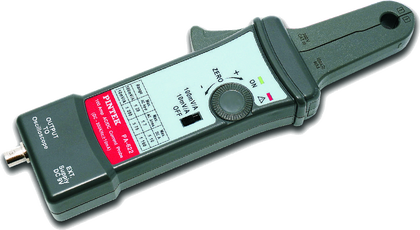
- 70.7 Arms continuous
- 100 / 10 mV/A
- ±3% (100 mV/A) DC
- 9 V battery or adapter
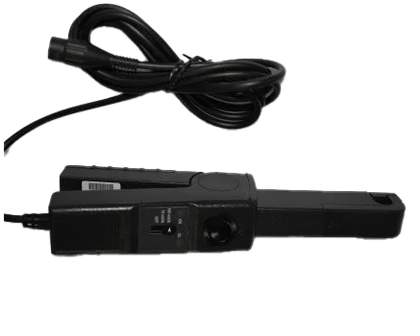
- 20 Arms continuous
- 50 / 5 mV/A
- ±2% DC
- 9 V adapter
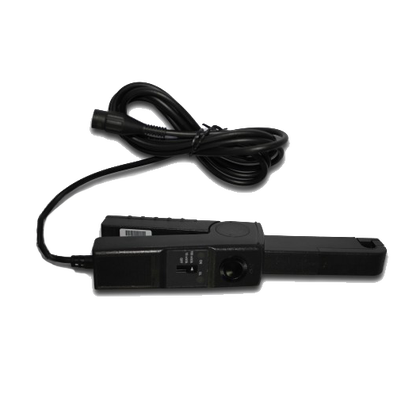
- 70 Arms continuous
- 50 / 5 mV/A
- ±2% DC
- 9 V adapter
- 70 Arms continuous
- 100 / 10 mV/A
- ±3% (100 mV/A) DC
- 9 V adapter
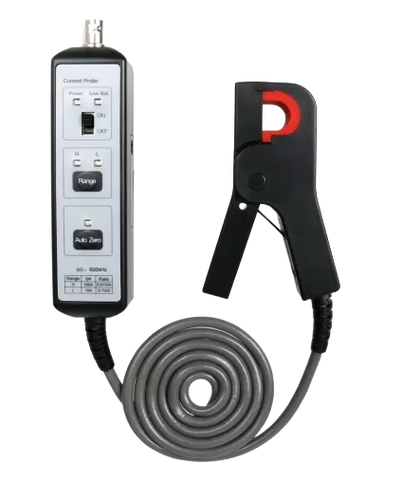
- 70.7 Arms continuous
- 100 / 10 mV/A
- ±3% (0.1 V/A) DC
- 9 V battery, 15 h
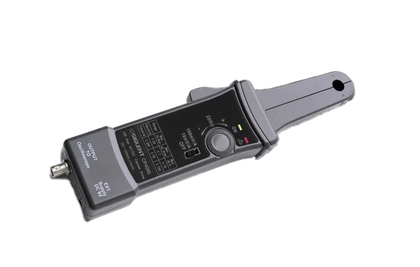
- 50 Arms continuous
- 500 / 50 mV/A
- ±3% ±20 mA DC
- 9 V adapter
Active probes with their own supply
Split-core Hall/transformer hybrids with a 12 V adapter, two switchable ranges and ±1% accuracy. This is where you go when the current itself is switching at MHz rates — and they work with any oscilloscope, whatever the brand.
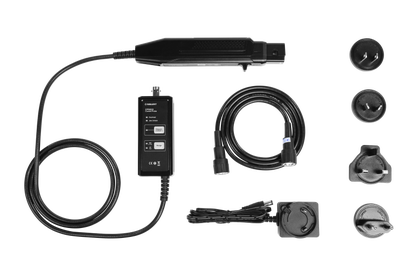
- 30 Arms continuous
- 5 A / 30 A ranges
- ±1% ±1 mA
- 12 V adapter
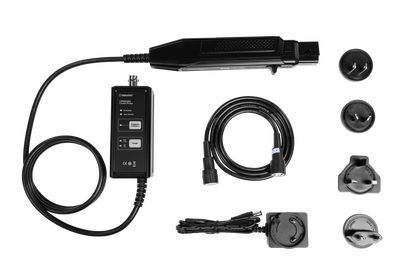
- 30 Arms continuous
- 5 A / 30 A ranges
- ±1% ±1 mA
- 12 V adapter
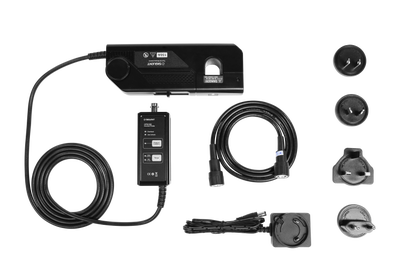
- 150 Arms continuous
- 30 A / 150 A ranges
- ±1% ±10 mA
- 12 V adapter
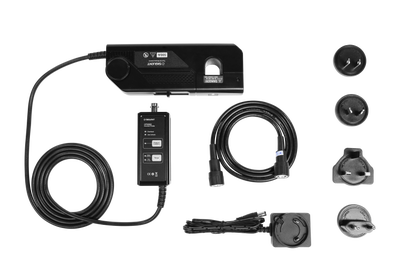
- 500 Arms continuous
- 75 A / 500 A ranges
- ±1% ±10 mA
- 12 V adapter
SAPBUS probes — powered by the oscilloscope
The same cores as the CP6000 range, but drawing power, identification and control down a single SAPBUS connector. No adapter, no battery. The scope names the probe, sets its attenuation and puts degauss and auto-zero on screen, and the channel reads directly in amps — and they cost less than the adapter-powered equivalent.
A SAPBUS input is required: SDS7000A, SDS6000A, SDS6000L, SDS5000X or SDS3000X HD. These will not work on an SDS2000X HD or any older scope with plain BNC inputs — for those, use a CP4000 or CP6000 probe above, or the battery-powered CPL5100.
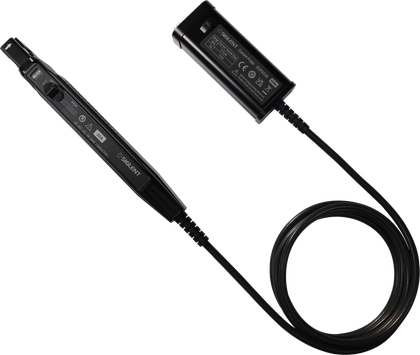
- 30 Arms continuous
- 5 A / 30 A ranges
- ±1% ±1 mA
- Powered by the scope
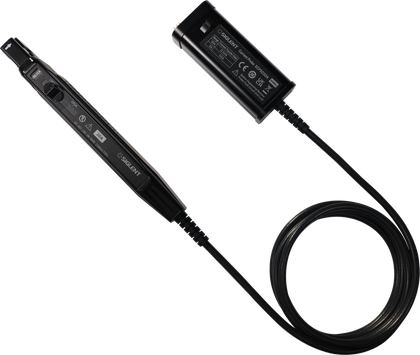
- 30 Arms continuous
- 5 A / 30 A ranges
- ±1% ±1 mA
- Powered by the scope
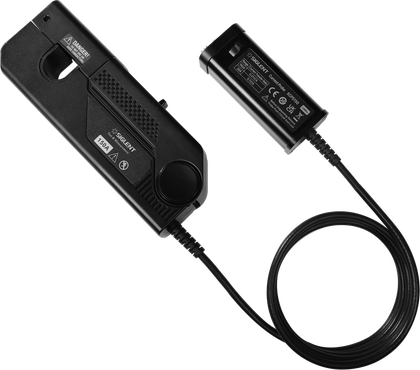
- 150 Arms continuous
- 30 A / 150 A ranges
- ±1% ±10 mA
- Powered by the scope
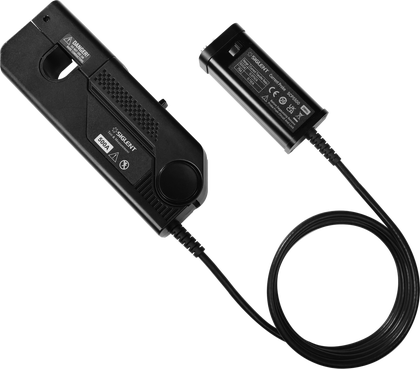
- 500 Arms continuous
- 75 A / 500 A ranges
- ±1% ±10 mA
- Powered by the scope
All fourteen compared
| Model | Bandwidth | Peak current | Continuous | Ranges | DC accuracy | Price |
|---|---|---|---|---|---|---|
| PA-622 PINTEK | DC–300 kHz | 100 A | 70.7 Arms | 100 / 10 mV/A | ±3% (100 mV/A) | €299 |
| CP4020 | DC–100 kHz | 60 A | 20 Arms | 50 / 5 mV/A | ±2% | €399 |
| CP4070 | DC–150 kHz | 200 A | 70 Arms | 50 / 5 mV/A | ±2% | €625 |
| CP4070A | DC–300 kHz | 200 A | 70 Arms | 100 / 10 mV/A | ±3% (100 mV/A) | €708 |
| CPL5100 | DC–600 kHz | 100 A | 70.7 Arms | 100 / 10 mV/A | ±3% (0.1 V/A) | €409 |
| CP4050 | DC–1 MHz | 140 A | 50 Arms | 500 / 50 mV/A | ±3% ±20 mA | €1,017 |
| CP6030 | DC–50 MHz | 50 A | 30 Arms | 5 A / 30 A | ±1% ±1 mA | €2,077 |
| CP6030A | DC–100 MHz | 50 A | 30 Arms | 5 A / 30 A | ±1% ±1 mA | €2,854 |
| CP6150 | DC–12 MHz | 300 A | 150 Arms | 30 A / 150 A | ±1% ±10 mA | €3,995 |
| CP6500 | DC–5 MHz | 750 A | 500 Arms | 75 A / 500 A | ±1% ±10 mA | €5,345 |
| SCP5030 SAPBUS | DC–50 MHz | 50 A | 30 Arms | 5 A / 30 A | ±1% ±1 mA | €1,880 |
| SCP5030A SAPBUS | DC–100 MHz | 50 A | 30 Arms | 5 A / 30 A | ±1% ±1 mA | €2,580 |
| SCP5150 SAPBUS | DC–12 MHz | 300 A | 150 Arms | 30 A / 150 A | ±1% ±10 mA | €2,980 |
| SCP5500 SAPBUS | DC–2 MHz | 750 A | 500 Arms | 75 A / 500 A | ±1% ±10 mA | €4,680 |
Prices exclude VAT. Peak current derates with frequency on all clamp probes — see the individual product pages. Errors and omissions excepted.
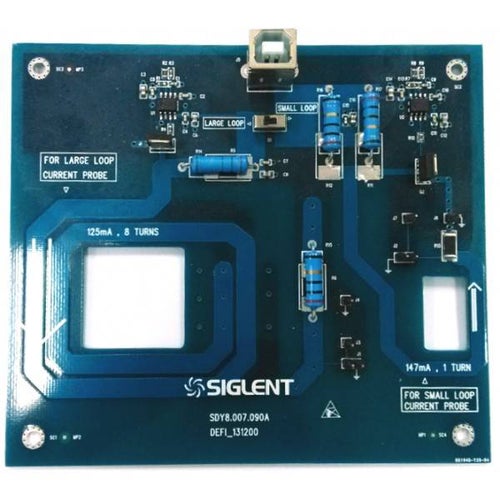
Measuring power? You need the deskew fixture
A current probe delays its signal a little more than a voltage probe does. Multiply volts by amps with a few nanoseconds of skew between them and the power figure is simply wrong — switching-loss numbers are the worst affected, because all the energy is in the transition. The DF2001A gives you a known edge on both probes at once so you can null the offset before you start.
DF2001A — €219Frequently asked
What is the difference between a current probe and a clamp meter?
A clamp meter gives you one number — usually an RMS figure averaged over many cycles. A current probe gives you the waveform on an oscilloscope. Two loads can draw the same RMS current while one of them peaks three times higher, and only the waveform tells you that. Fuse ratings, shunt sizing, capacitor lifetime and EMC behaviour all follow the peaks.
Do I need an AC/DC probe or will an AC-only one do?
If there is any direct current in what you are measuring — a DC bus, a battery, a PV string, the standing current in a supply rail — you need a Hall-effect AC/DC probe. Every probe on this page reads DC. An AC-only clamp shows nothing at all on a DC circuit.
Why do the high-current probes have less bandwidth?
A bigger core is needed to carry more current without saturating, and a bigger core responds more slowly. That is why the 500 A CP6500 stops at 5 MHz while the 30 A CP6030A reaches 100 MHz. Choose the current you actually need and no more — you buy bandwidth back.
What does the peak current derating mean?
Clamp probes hold their full peak rating only up to part of their bandwidth, then derate as frequency rises. The Pintek PA-622, for example, carries 100 A up to about 40 kHz and around 20 A at 300 kHz. High current and high frequency are not available at the same time on any clamp of this type.
Which probes work with which oscilloscope?
The CP4000 series, the CPL5100 and the Pintek PA-622 output a voltage on a plain BNC, so they work with any oscilloscope of any brand — and with a multimeter. The CP6000 series takes its own 12 V adapter and also connects over BNC, so it is equally universal. The SCP5000 series is different: it is powered and configured by the scope over SAPBUS, so it needs an SDS7000A, SDS6000A, SDS6000L, SDS5000X or SDS3000X HD. It will not work on an SDS2000X HD or older.
SCP5000 or CP6000 — what is the difference?
Identical cores and identical ±1% accuracy. The CP6000 runs from a 12 V adapter and works with any oscilloscope; the SCP5000 takes power and configuration from the scope over SAPBUS, which means no adapter and automatic setup, but only on a SAPBUS scope. Where you can use the SCP, it is the cheaper of the two — the SCP5150 saves over a thousand euro against the CP6150.
Do I need the DF2001A deskew fixture?
Only if you are measuring power — switching losses, efficiency, safe operating area. A current probe delays its signal slightly more than a voltage probe, and multiplying V by I with a few nanoseconds of skew gives a wrong power figure. The DF2001A lets you null that offset before you start.
Tell us what you are measuring
The current you expect, the frequency it moves at and whether there is DC in it — that is all we need to point you at the right probe, and to say plainly when the cheaper one covers it.